Most people might be drawn to the color of the cabinets, the look of the marble, or the design of the appliances when seeing a new kitchen, but
The truth is that what distinguishes any successful kitchen is not just its appearance, but the way it operates day after day.
A kitchen where you feel comfortable while cooking is not so by chance, but
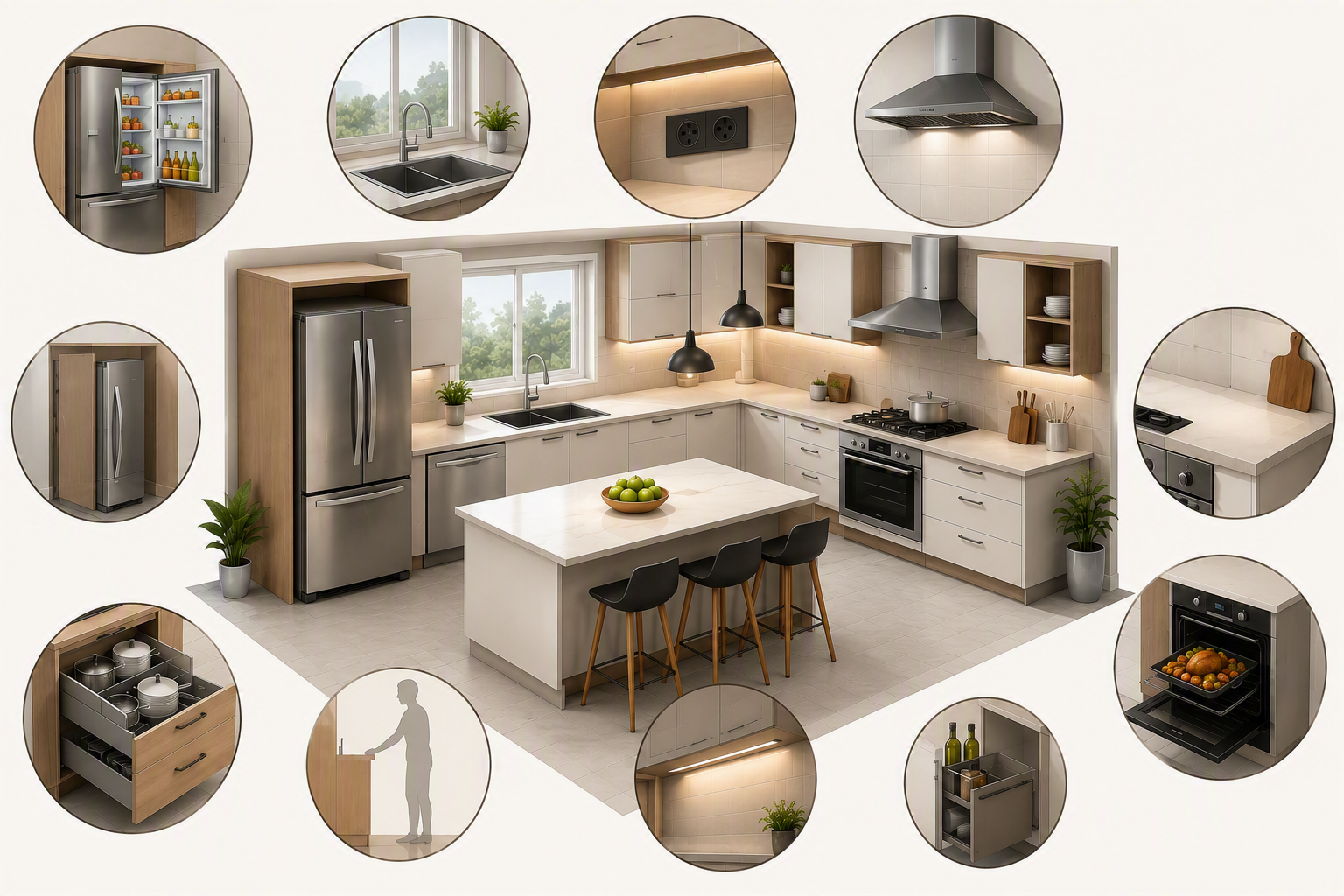
The result is dozens of small details that the designer takes into account before implementing anything. The location of the sink, the direction of the refrigerator door, the height of the countertop, the location of the extractor fan, and even the number of electrical outlets… all these elements may seem simple, but they directly affect ease of movement, speed of work, and ease of use.
In this article, we take you on a tour of these details that many may not notice, but they are
It is what makes the real difference between a beautiful kitchen and a kitchen designed to serve its user for many years.
Planning is more important than choosing colors
Before choosing the color of the cabinets or the type of marble, any professional designer begins by studying how the kitchen will be used.
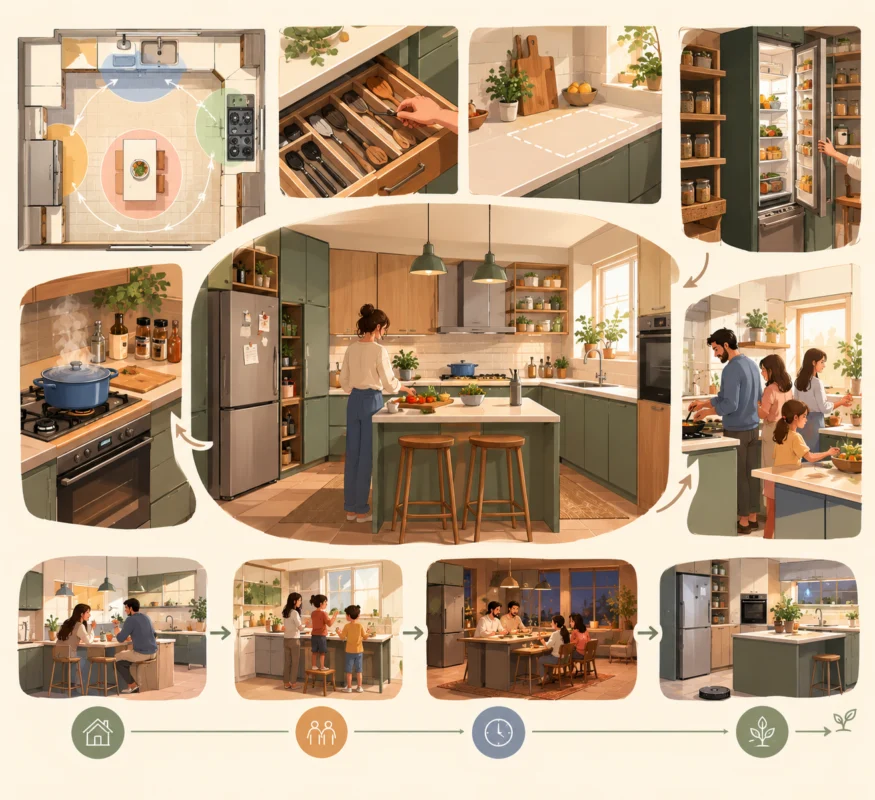
How many people are in the family? How much cooking is done daily? Does more than one person use the kitchen at the same time? Does the house need a lot of storage space?
The answer to these questions determines the layout of the kitchen, because a successful design depends not only on the space, but also
Based on the way people move around inside it.
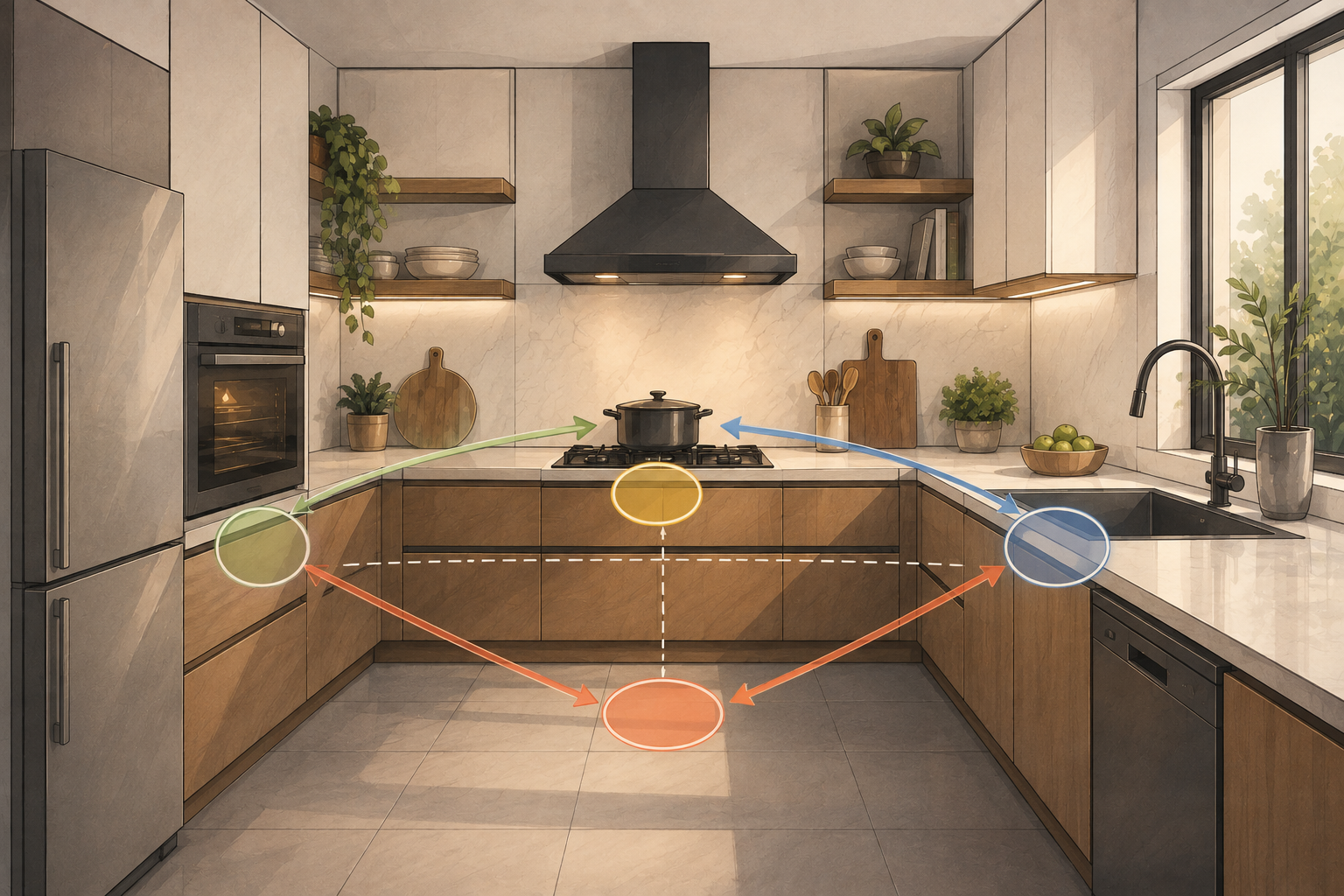
This is why designers rely on what is known as the work triangle, which is the relationship between the refrigerator, the sink, and the cooking area. The more balanced the distances between these elements, the smoother the movement becomes, and the fewer steps the user takes while preparing food.
When electricity is in the right place
Electrical outlets may seem like a small detail, but they are among the most carefully planned elements.
Appliances that are used frequently, such as blenders, kettles, or coffee machines, need outlets close to the work surface for ease of use, while being kept away from water sources for safety.
Separate electrical circuits are also allocated for high-consumption appliances such as the oven or dishwasher, with additional sockets left for future use – a step many people overlook and then have to use electrical connections permanently.
The sink… the true heart of the kitchen
If you look at different kitchen designs, you will find that the sink is often close to a source of natural light, and often directly under a window.
This choice is not only related to aesthetics, but also gives the user better lighting while washing vegetables or cleaning dishes, and it helps to ventilate the place and reduce the humidity resulting from daily use.
Even in kitchens where space is limited, designers make sure to provide strong lighting above the sink so that visibility remains clear at all times.
The right height will save you years of exhaustion
There is no hard and fast rule that says all work surfaces must be the same height.
The height of the marble slab varies according to the nature of the user and the average height in each country, and may even vary within the house itself if there is an area designated for kneading or preparing food.
Choosing the right height reduces repeated bending and makes standing for long periods more comfortable. These are details that the user may not feel at first, but they become clearly apparent with daily use.
A simple move… but it saves a lot of time
One of the details that many people overlook is the direction in which the refrigerator door is opened.
It may seem insignificant, but it affects the ease of access to ingredients while cooking, and the movement of a person within the kitchen, especially in small spaces.
Designers also make sure to leave enough space in front of the refrigerator so that the doors can be fully opened and the drawers can be easily removed when cleaning or maintenance, without being obstructed by cabinets or walls.
Empty spaces are not wasted space
Some may wonder why part of the marble slab next to the oven or stove is left unused.
But this space plays an important role during use, as it is where the hot trays are placed after being taken out of the oven, and it also provides a safe space to move the pots and reduce the risk of touching hot surfaces or moving them long distances.
In good design, every centimeter has a function, even if at first glance it seems to be underutilized.
The extractor fan is part of the design, not just a device
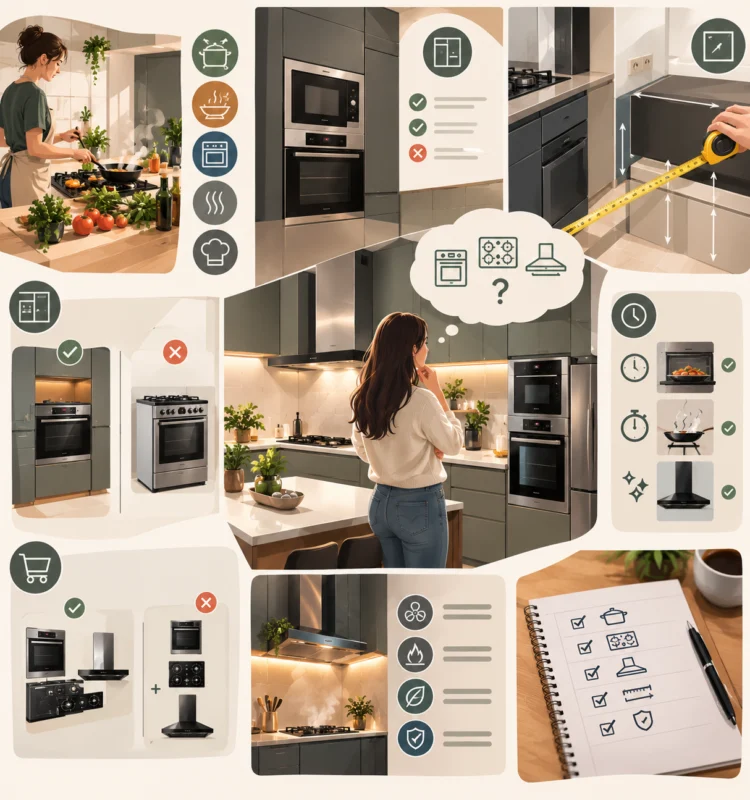
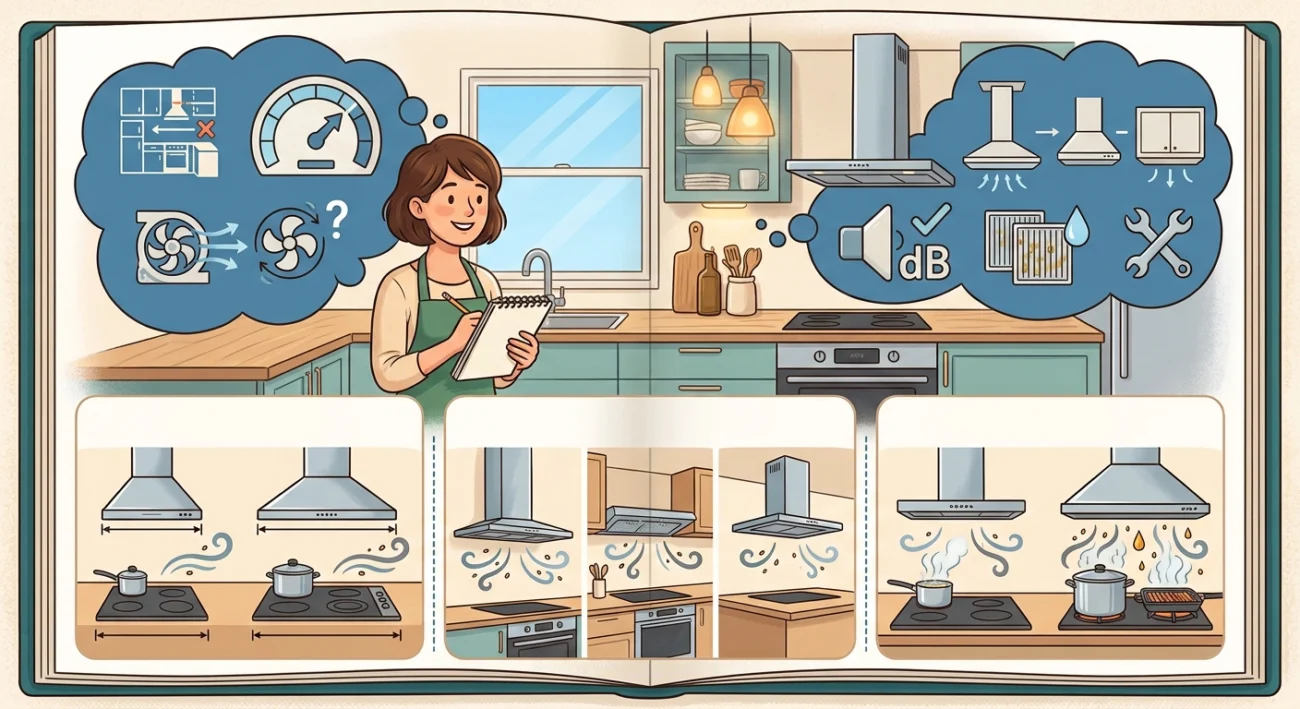
Many people believe that the efficiency of a extractor fan depends only on the power of the motor, while the truth is that the method of its installation is no less important than its specifications.
The right size, the correct height, and its compatibility with the width of the cooking area are all factors that affect its ability to capture vapors and grease before they spread throughout the kitchen.
The choice of the appropriate operating system, whether external exhaust or air recirculation using carbon filters, also depends on the nature of the kitchen and the possibility of connecting it to an external ventilation opening.
Therefore, choosing the right extractor fan starts with studying the design of the kitchen itself, and not just comparing extraction power.
Why have deep drawers become the preferred choice?
In recent years, most modern kitchen designs have moved towards using deep drawers instead of traditional lower shelves.
The drawer allows you to see all the contents as soon as it is opened, and makes accessing large pots and pans easier, without having to bend over or take everything out in the front to reach what is in the back.
Internal partition units also help to better organize tools and make more efficient use of space.
Lighting is a functional element before it is an aesthetic touch
Lighting may give a kitchen a more elegant look, but it is primarily a practical element.
Therefore, designers rely on more than one source of light; general lighting for the entire kitchen, directed lighting above the work surfaces, and another under the cabinets to reduce shadows while cutting or preparing food.
These details make working inside the kitchen more comfortable, especially in the evening or in kitchens that do not receive enough natural light.
A successful kitchen is one that serves its user
You might find a kitchen that is moderately priced but practical and comfortable, while another kitchen with luxurious equipment but lacking ease of use.
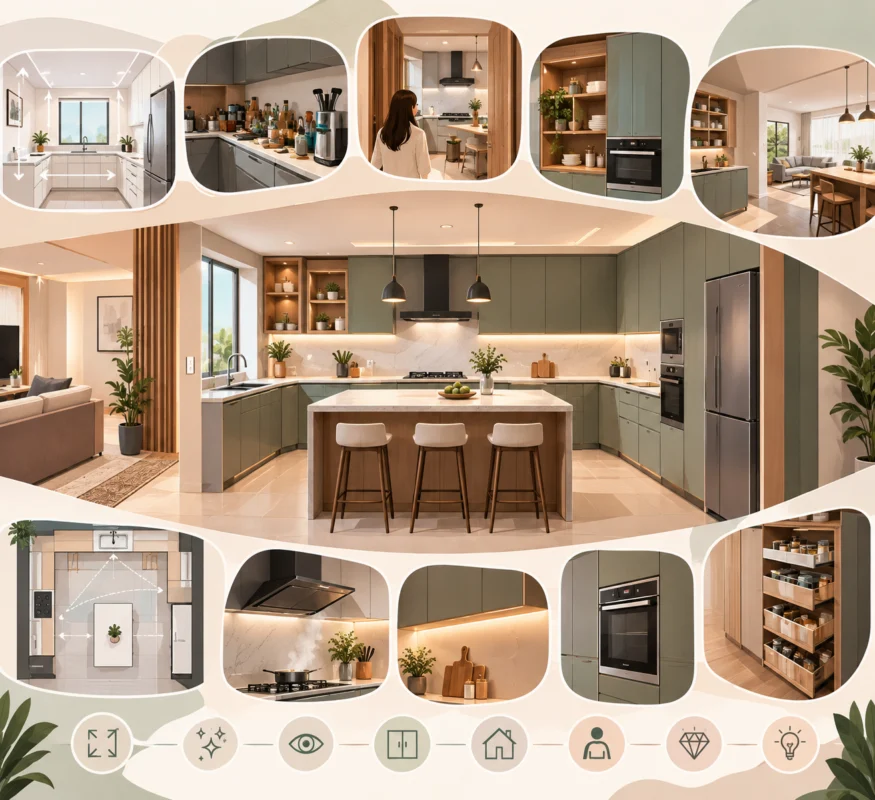
The real difference is not in the price of the marble or the color of the cabinets, but in the quality of the planning, the distribution of appliances, and the attention to the small details that family members use every day.
When these details are carefully designed, the kitchen becomes a more comfortable place, and the cooking experience transforms from a daily chore into a pleasant and seamless experience.
The success of a kitchen design is not measured by its size or cost, but by how well it meets the needs of its users. Every detail, no matter how small, affects comfort and efficiency over time.
Whether you're planning a new kitchen design or renovating your existing one, don't focus solely on aesthetics. Give equal attention to the layout, design, and practical choices. Ultimately, it's the small details that make up a kitchen you'll live comfortably in for years.
If you're planning to furnish a new kitchen or upgrade your existing one, always start with proper planning before choosing appliances. When selecting a range hood, oven, or any other appliance, ensure it complements your kitchen design and daily usage patterns, as the right appliance in the right place makes a real difference in comfort and performance.