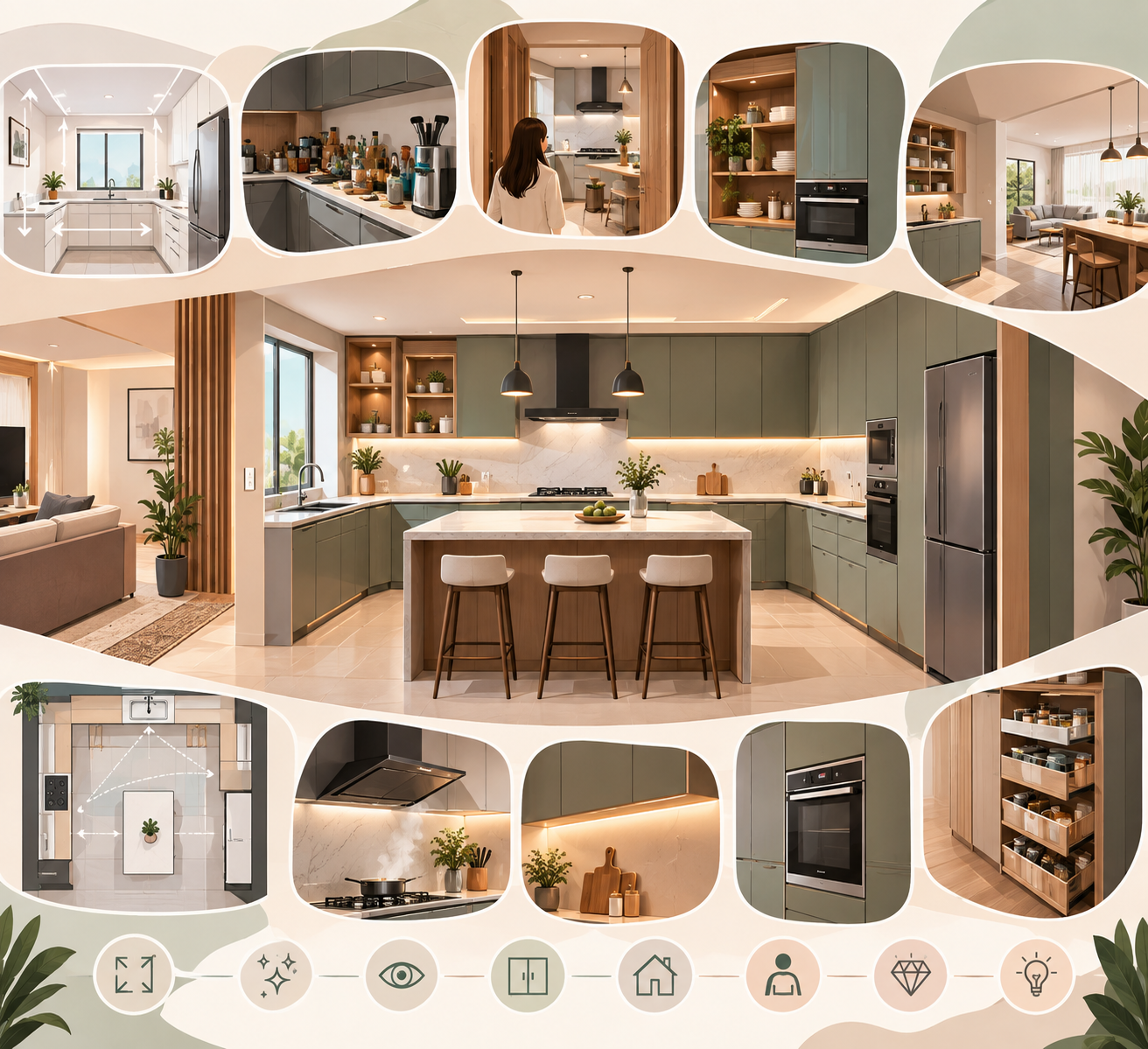
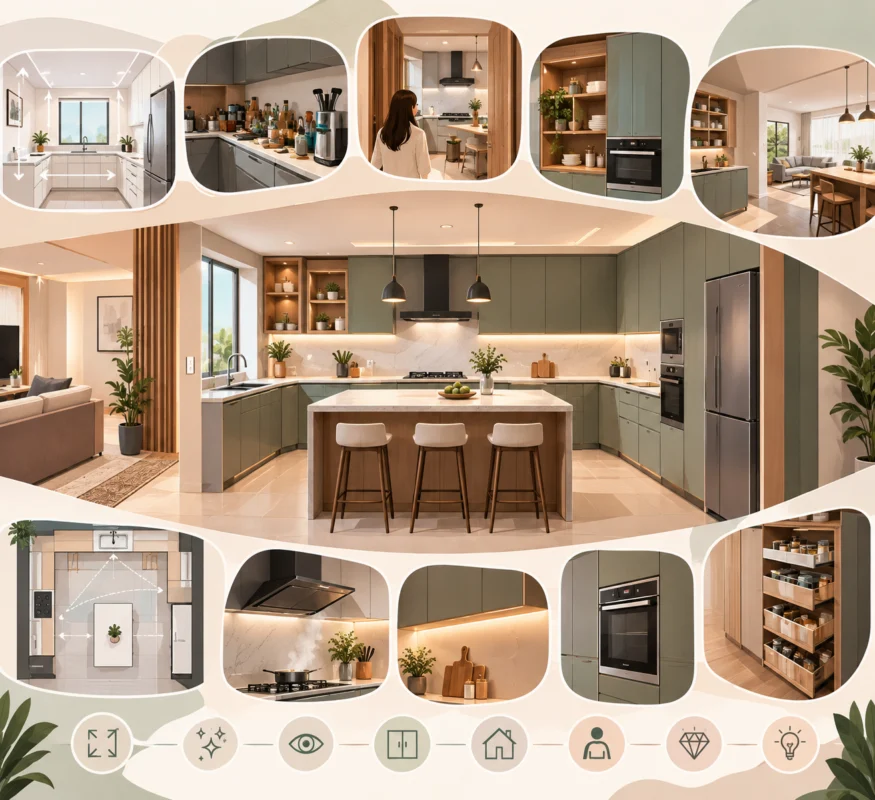
You may enter a kitchen for the first time and immediately feel that it is spacious, tidy and comfortable, even if its area is not large.
In another kitchen, you might find more space, more cabinets, and multiple appliances, but the place looks cluttered and uncomfortable.
The difference here is not always in the size of the kitchen or the cost of materials.
Sometimes the reason is the way the kitchen is designed itself.
A successful kitchen depends not only on choosing a beautiful color or a luxurious material, but on a set of details that work together to create a space that looks harmonious, is easy to use, and is comfortable for everyday life.
So how can a beautiful appearance be combined with practical use?
The kitchen looks bigger than its actual size
It is not necessary to increase the size of the kitchen in order for it to appear more spacious.
Design can dramatically change the perception of space.
When visual lines are calm, colors are harmonious, and surfaces are not cluttered, the eye senses that there is more space than actually exists.
Certain details help to achieve this feeling, such as:
- Use similar colors instead of many colors.
- Choosing cabinets with a simple design.
- Take advantage of natural lighting.
- Use good lighting in work areas.
- Reduce the number of items permanently placed on the marble.
- Integrating some devices into the design of the cabinets.
The idea is not to make everything white or to abandon details, but to give the eye enough space to move around within the design without clutter.
Why do some kitchens seem cramped even though they are large?
Here an important design concept emerges:
Space is not the same as the feeling of space.
The kitchen may be spacious, but the abundance of visible items makes it appear smaller.
A device on the counter, many packages, multiple colors, cabinets with different details, and inconsistent devices… Each element individually may not be a problem, but their combination creates what can be described as visual chaos.
Therefore, kitchen organization is not always about hiding everything.
Sometimes it is enough for the elements in front of the eye to be consistent in color, size and position.
The less competition there is between details, the more tranquil the design becomes.
What does your eye see first when you enter the kitchen?
When entering any space, we don't notice all the details at the same moment.
The eye picks up some elements first, then gradually moves to the rest of the place.
Therefore, the arrangement of elements within the kitchen affects the first impression.
It might be the extractor fan, the kitchen island, a particular color in the cabinets, or a distinctive lighting feature.
This idea can be used in design.
Instead of all elements being equally eye-catching, key elements can be chosen to be the focal point, while the rest of the details support them.
This way the kitchen looks more organized even if it contains a large number of items.
Closets are not just for storage
When we think about kitchen cabinets, the first question is often:
How many things can I put inside it?
But closets play a bigger role than just storage.
They form a large part of the visual lines of the kitchen, and affect the feeling of height and spaciousness of the space.
Extended cabinetry can make walls appear more exploited, while open or glass units can add visual variety when used sparingly.
The choice of handles, the harmony of the doors, and the way the units are distributed can also make the design look calmer and more organized.
Therefore, when choosing cabinets, don't just think about what you will store inside them.
Also consider:
What will it look like when all the doors are closed?
The hardware is part of the design
Devices are not just tools that perform specific functions.
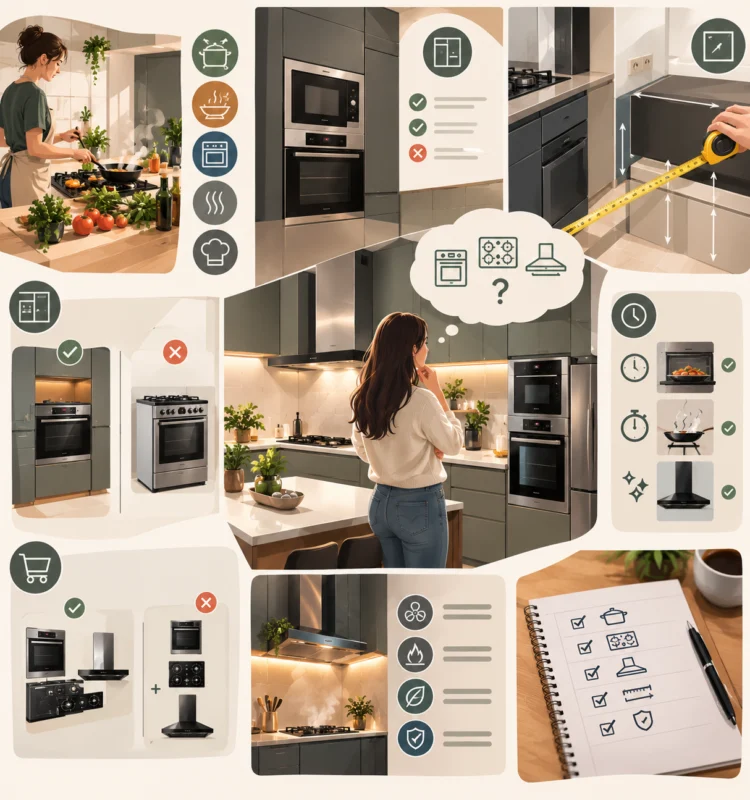
The location of the oven, stove, or extractor fan affects the overall appearance of the kitchen.
This is why integrated devices have become a popular choice in modern designs.
When the oven, microwave, or extractor fan is integrated with the cabinetry, visual differences decrease and the lines become more uniform.
But integration does not mean that all devices have to be hidden.
Sometimes the appearance of a particular device is intentional because it represents an aesthetic point within the design, especially when its shape is consistent with the rest of the elements.
The important thing is that the appearance of the devices is part of the plan, and not a result of the lack of other space to put them.
An open kitchen requires different thinking
When the kitchen is open to the living room or dining area, it cannot be treated as a completely separate space.
It has become part of the overall landscape of the house.
This is where the importance of coordination between the kitchen and the surrounding space becomes apparent.
Similar materials, harmonious colors, and thoughtful lighting can help make the transition between the kitchen and living room smoother.
The island also plays an important role in some designs; it can be a preparation or dining area or a gathering point, while at the same time acting as an element that separates the two spaces without closing them off from each other.
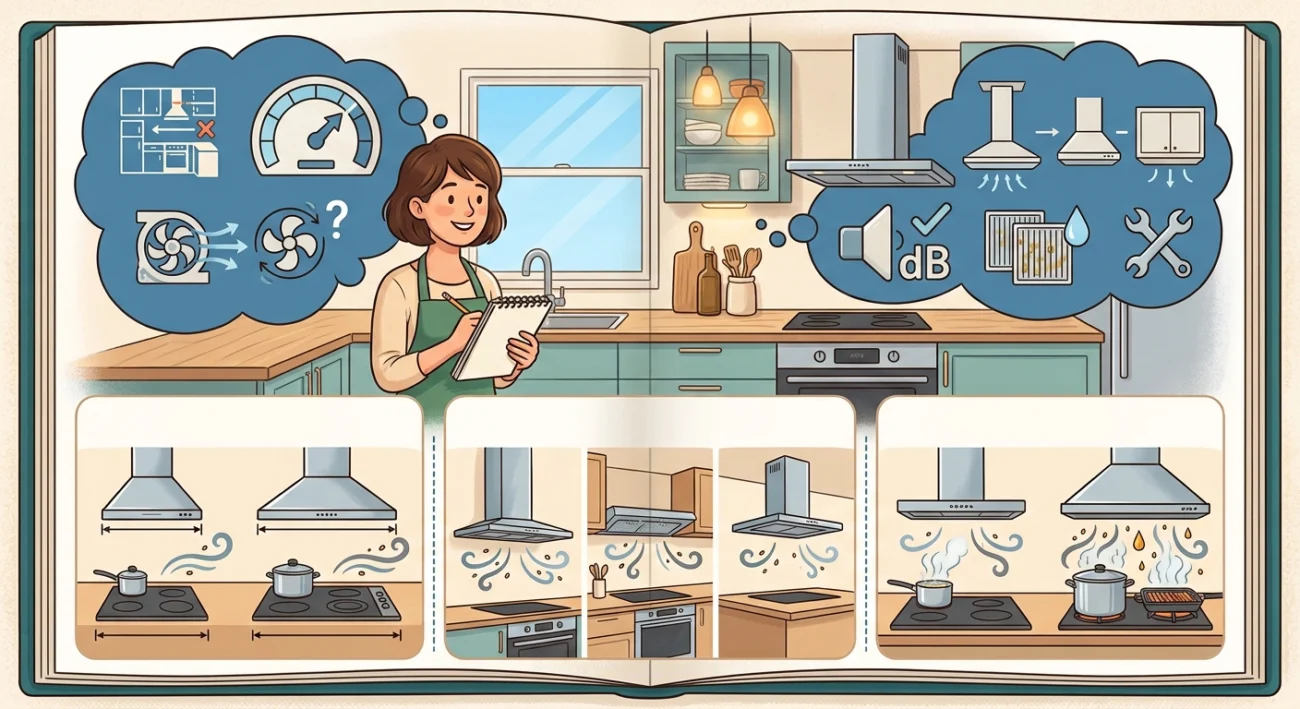
But an open kitchen also needs more attention to ventilation, because fumes and odors can easily spread to the rest of the house.
Therefore, choosing a suitable extractor fan becomes part of the design and not just a decision related to a separate appliance.
The kitchen looks beautiful in the pictures… but is it really comfortable?
This is one of the most important points to consider when designing any kitchen.
The picture may show a great kitchen, but the picture doesn't tell you:
Can you open the oven door easily?
Is there enough space to stand in front of it?
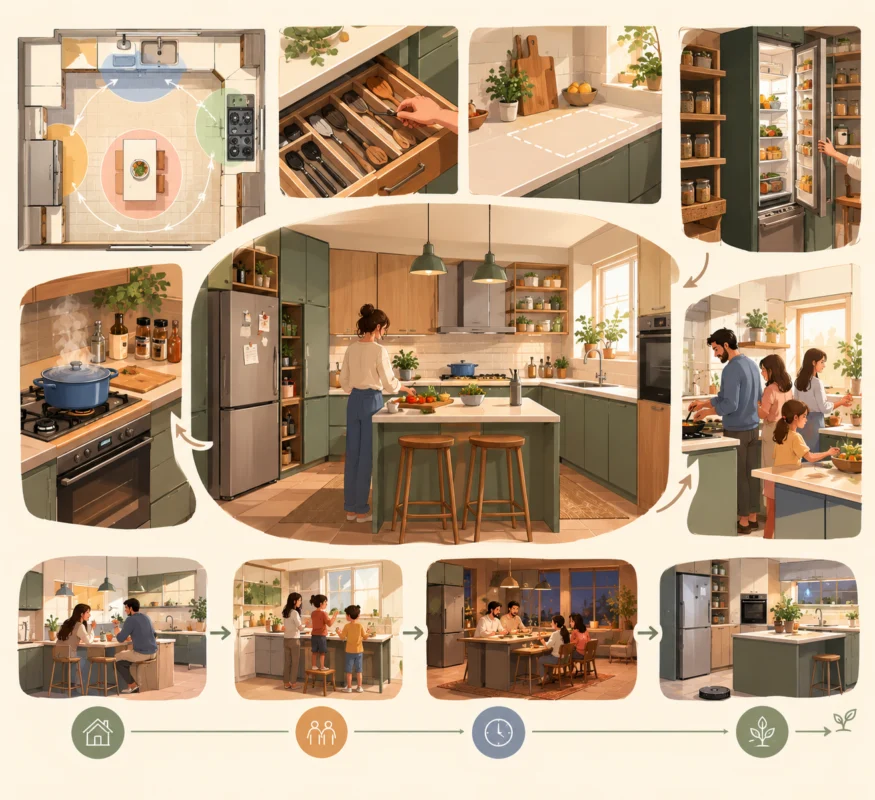
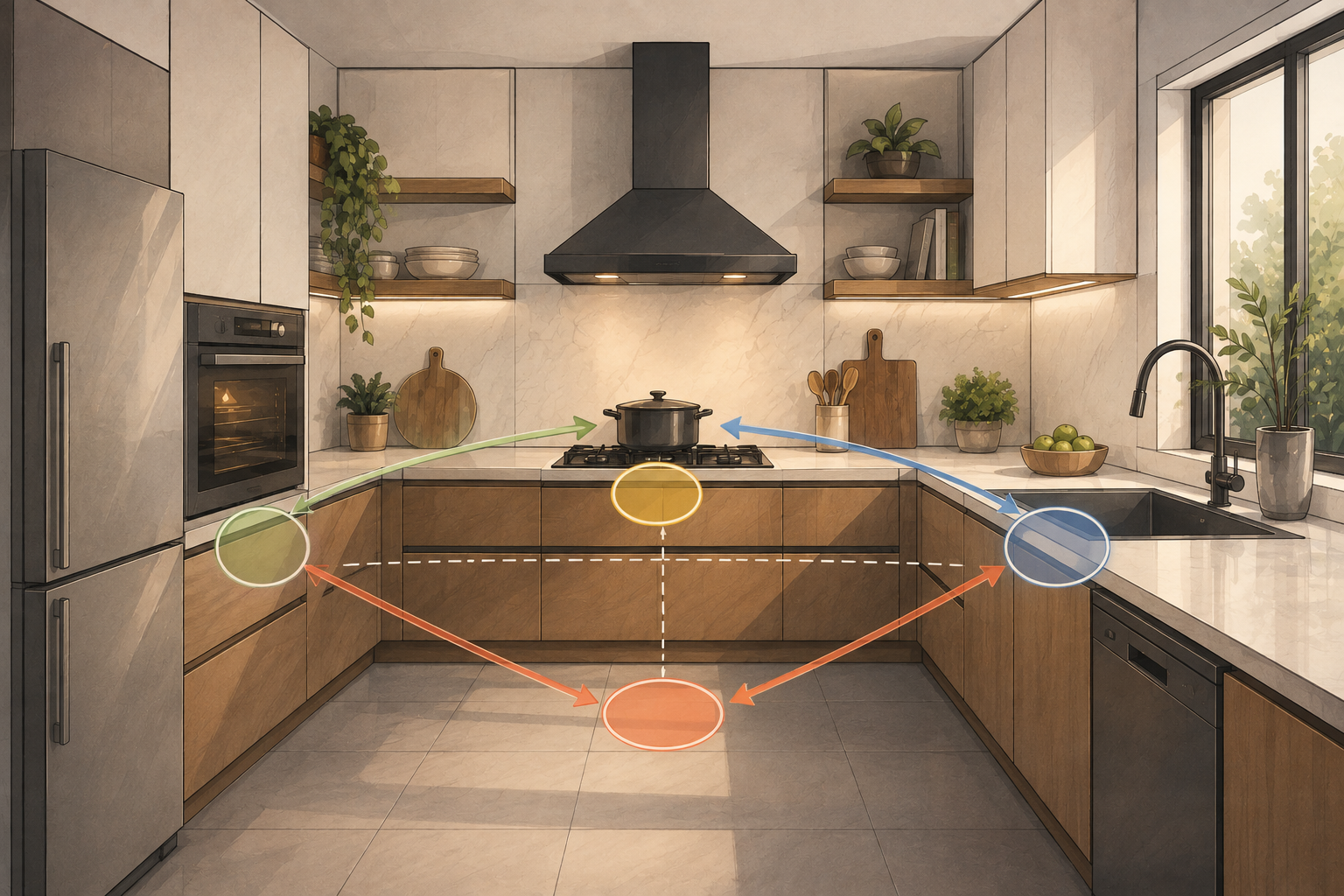
Can you move between the sink, the stove, and the refrigerator without bumping into each other?
Does the marble counter provide a suitable space for preparation?
Are the tools you use daily located nearby?
These details are what define true kitchen comfort.
Successful design not only makes the movement look beautiful in the image, but also makes it look natural during use.
The distance between devices makes a difference
When distributing devices, it is important to think about the relationship between them and not about the location of each device individually.
Having adequate space around the cooking area makes food preparation easier.
Placing the oven or stove in a location that does not obstruct movement also helps to make the kitchen safer and more comfortable.
The goal is not to arrive at a single rule that suits all kitchens, because every space has its own circumstances.
But the most important rule is:
Every appliance should be in a location that serves your way of using the kitchen.
Luxury doesn't need to be exaggerated
There are kitchens that look luxurious even though their design is very simple.
The reason is often not the abundance of details, but rather the harmony between them.
Repeating the same material in more than one place, color coordination, choosing appropriate lighting, regular cabinet lines, and appliances that match the design… all are small details, but when they come together they give a sense of quality.
Conversely, using too many materials, colors, and shapes may have the opposite effect.
Therefore, luxury does not mean adding more.
Sometimes it means knowing what to leave out of the design.
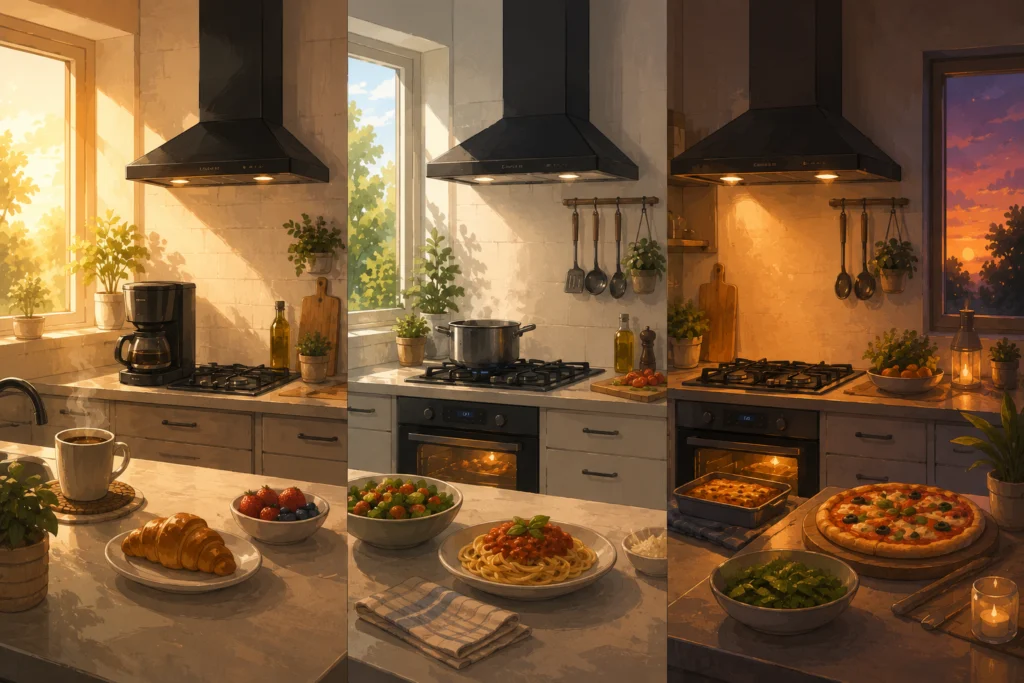
Lighting completely transforms a kitchen
Even the best design can lose a large part of its impact if the lighting is unsuitable.
The kitchen needs lighting that helps with work, and at the same time complements the overall look.
General lighting and preparation area lighting can be combined, with under-cabinet lighting used when needed.
The advantage here is that the lighting does not only perform a practical function.
It can highlight textures, define lines, add depth to a space, and make a kitchen look warmer or more modern depending on its choice.
When form meets comfort
Ultimately, the best kitchen design is not the one with the most details, nor is it the most expensive.
Rather, it is the design that makes everything look as if it is in its right place.
Cabinets serve both storage and aesthetics.
The devices serve the purpose and design.
Lighting serves both the visual experience and the atmosphere.
The extractor fan serves ventilation and complements the look of the kitchen.
And the movement spaces make all these elements easily usable.
When these elements work together, the kitchen becomes more than just a beautiful space.
It becomes a place you feel comfortable using every day.
Before you start designing your kitchen
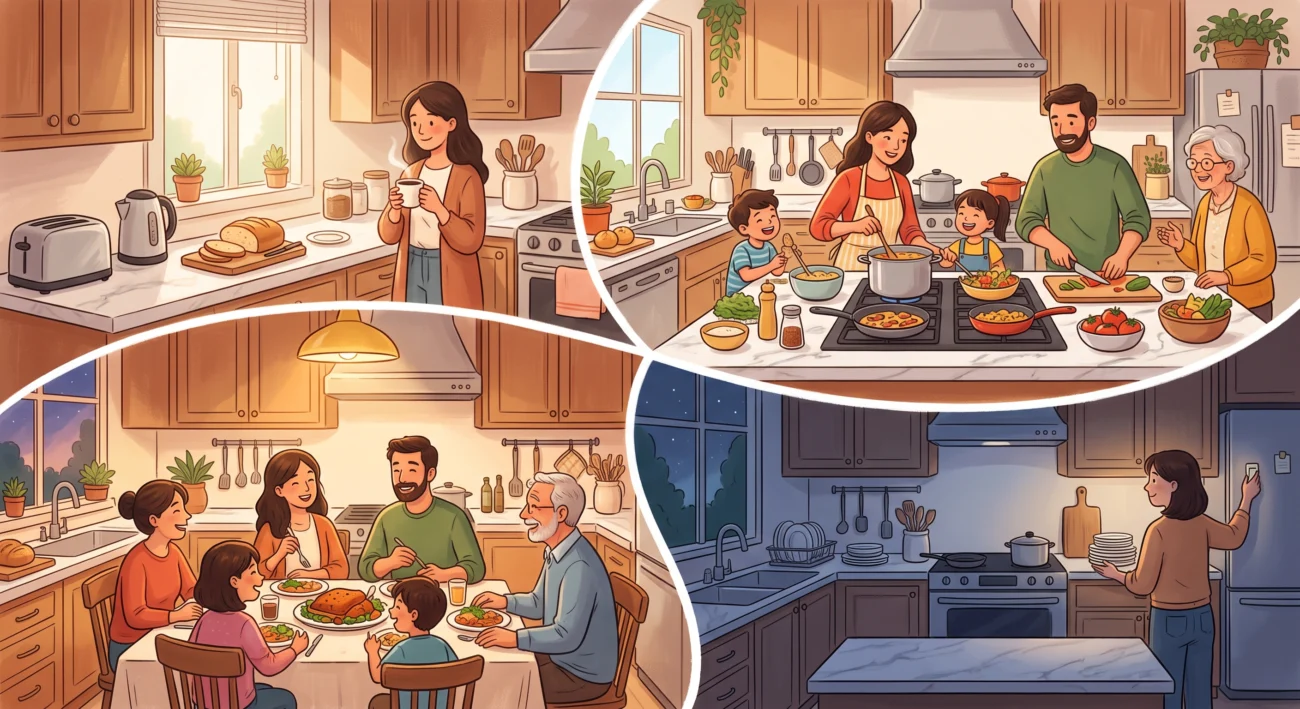
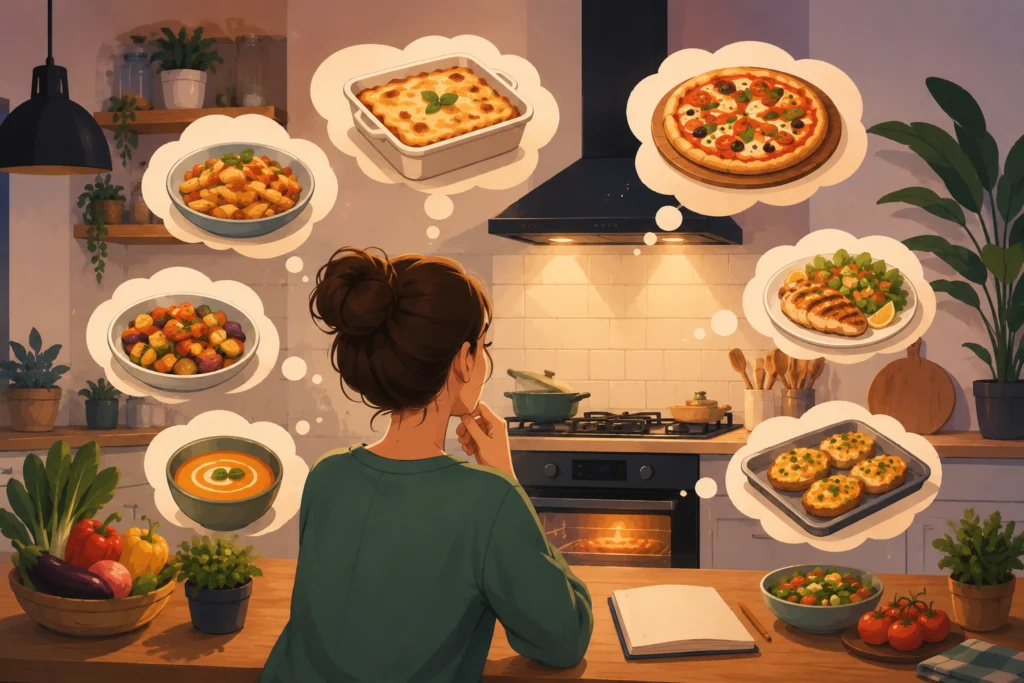
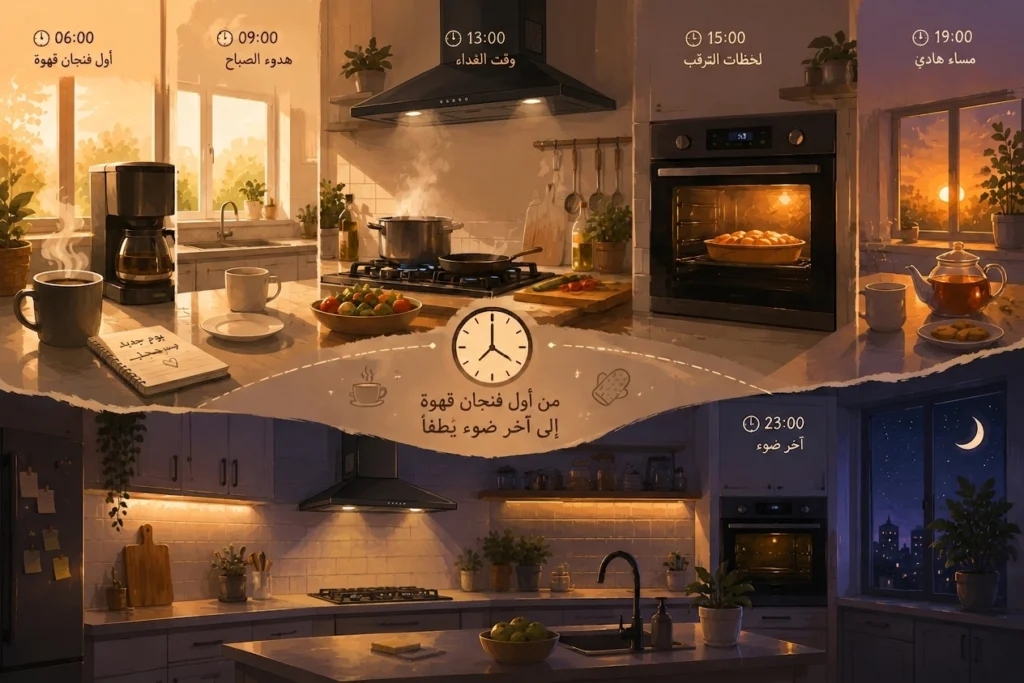
Before choosing colors or materials, try to imagine your day inside the kitchen.
Where will you start preparing the food?
Where will you put the ingredients?
Where will you stand while cooking?
How will you open the oven?
Where will you put the tools you use constantly?
What will you see when you enter the kitchen?
These simple questions can help you make much better design decisions than relying on images alone.
Because the kitchen is ultimately not a design showcase.
It's a space we use every day.
kitchen design does not depend on a single element.
It is not enough for the closets to be beautiful, or for the space to be large, or for the appliances to be modern.
True value emerges when all these elements are integrated together.
A kitchen that looks spacious without being large, tidy without being empty, elegant without being over the top, and comfortable to use and not just beautiful in pictures.
This is the difference between a kitchen designed to look good, and a kitchen designed to live well with you.
Before you choose the style of your kitchen, first think about how you will use it every day, then make the design, appliances, storage and lighting work together to create a space that combines beauty and comfort.