When we think about kitchen appliances, the first thing that usually catches the eye is the specifications: the number of programs, the power of the appliance, the materials, the design, or even the additional technologies it contains.
But a good device is not necessarily the one with the most capabilities.
Sometimes a simple feature that suits your needs is far more important than a range of capabilities you'll rarely use. And sometimes, a device that looks great on paper might not deliver the expected experience due to its installation or placement in the kitchen.
Therefore, kitchen appliances need to be viewed as part of a complete space, not just as separate products. A person's needs, lifestyle, kitchen size, dimensions, installation, and usage all influence the value of the appliance and the daily user experience.
The right device isn't always the one with the most capabilities
Having more capabilities in a device does not necessarily mean that you will benefit from all of them.
An oven, for example, might have multiple programs for baking, grilling, and roasting, but the true value of some programs only becomes apparent if your specific oven usage requires them. The same principle applies to a stovetop and extractor hood; certain features might be crucial in one kitchen but less so in another.
What is important here is the difference between the specifications found in the product andits actual benefit during use.
For example, the ease of controlling the oven, the clarity of the programs, and how to clean it after use can be factors that affect daily life, even if they are not the first thing that appears in the specifications list.
This makes the device evaluation need to go beyond the idea of “What can the device do?” to “What will actually make a difference in its use?”.
Lifestyle changes how the device is used
The same kitchen appliance might be an essential part of one person's day, while its use is very limited for another person.
If you cook at home frequently, ease of use, cleaning, and quick access to the appropriate settings can significantly impact the experience. However, if you use the appliance less often, some of its advanced features may not be as valuable.
This is clearly evident with the oven, stove, and extractor fan.
An oven, for example, is not just a cooking space; the way the door opens, the layout of the interior space, the clarity of the controls, and the ease of cleaning are all things that go into daily use.
The stove is not just about the number of burners; the distribution of the burners, their sizes, and the distances between them can affect the ease of using more than one pot at the same time.
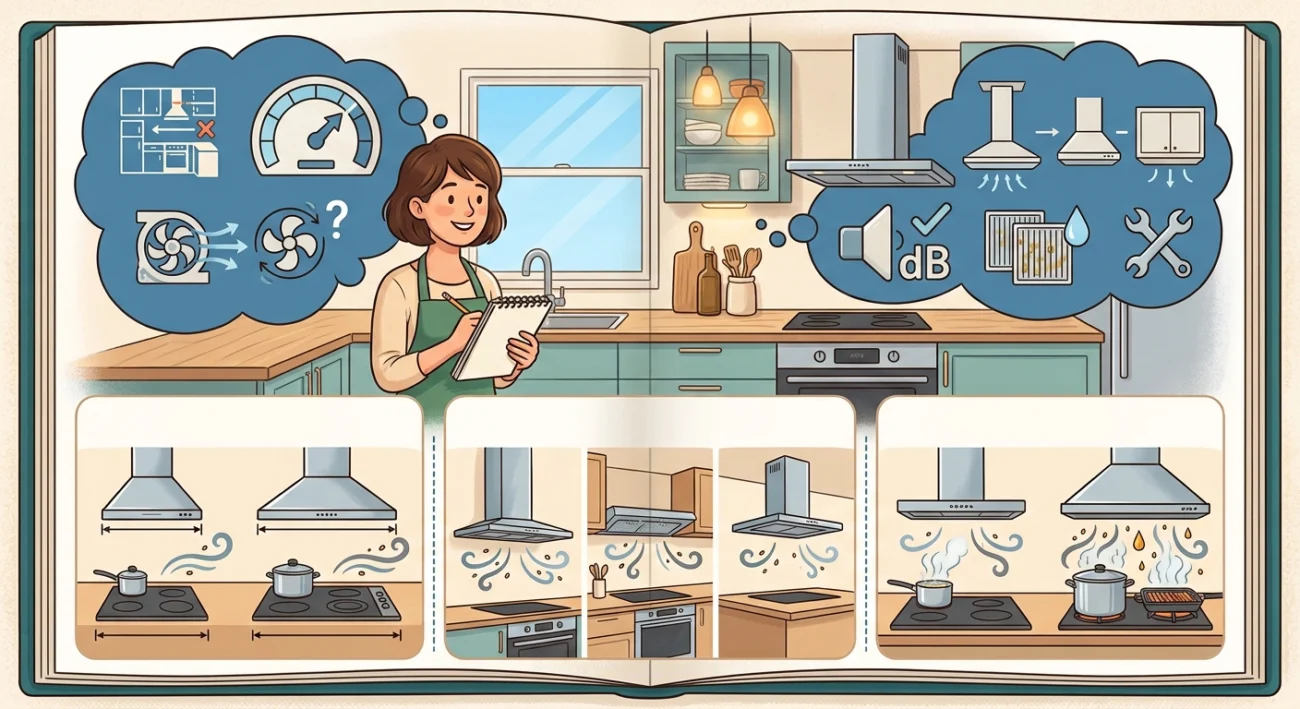
As for the extractor fan, its presence and power alone are not enough. Its location, the way the ventilation duct is installed, and the distance between it and the cooking surface are all parts of the final experience.
The same device can give two different experiences in two different kitchens
The device itself does not operate in isolation from the place where it is located.
An appliance might have excellent specifications, but placing it in a cramped space or installing it improperly can make it less convenient to use. Conversely, good space planning can make the appliance easier to use and more in harmony with the kitchen's layout.
The distance around the device is important, the direction of the doors opening is important, the location of the connections is important, and ventilation is important, especially with devices that need to release heat or vapors.
Therefore, installation is not a separate stage from the product. It is part of how the device will be used every day.
Before you measure the device… measure the space
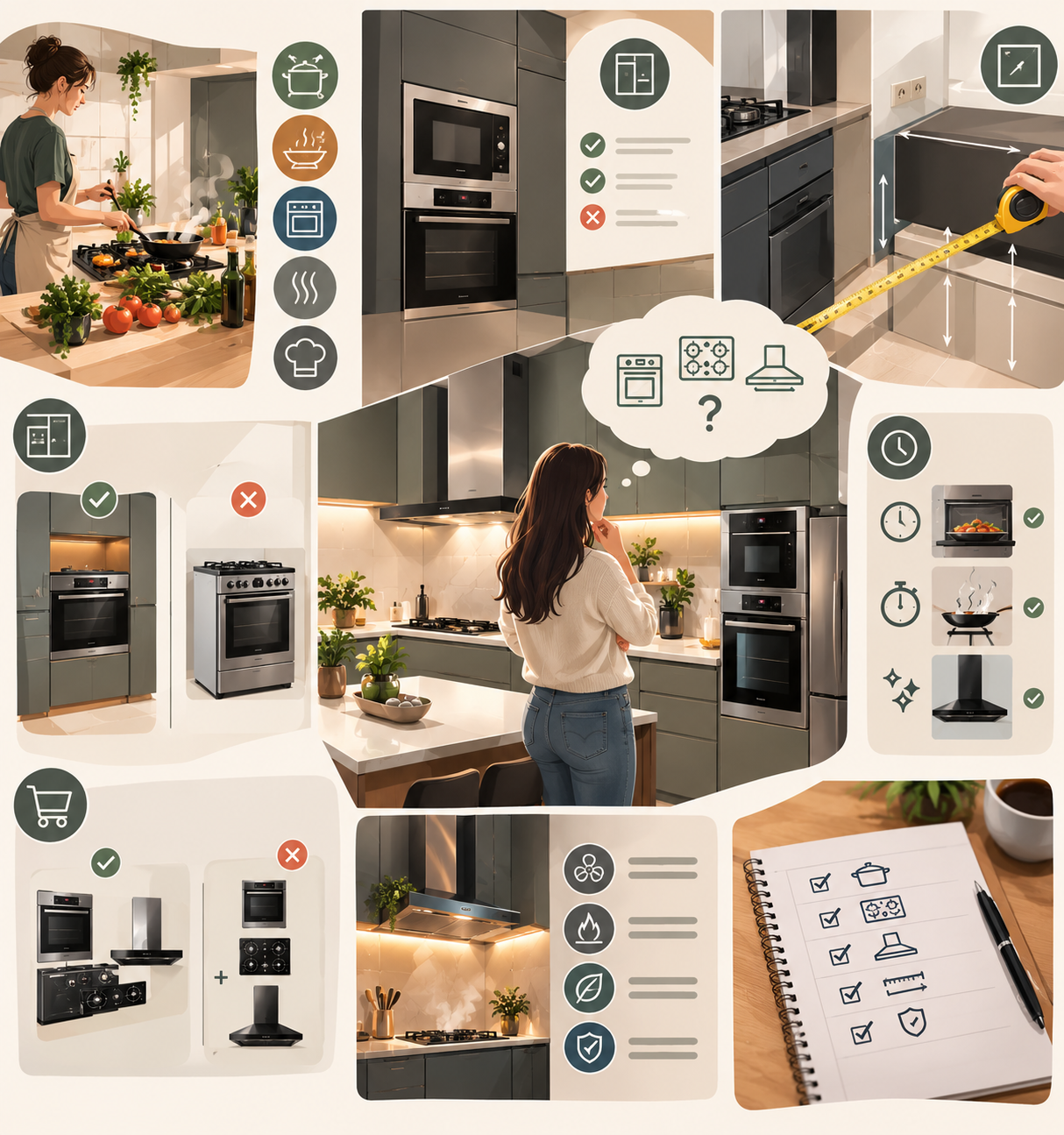
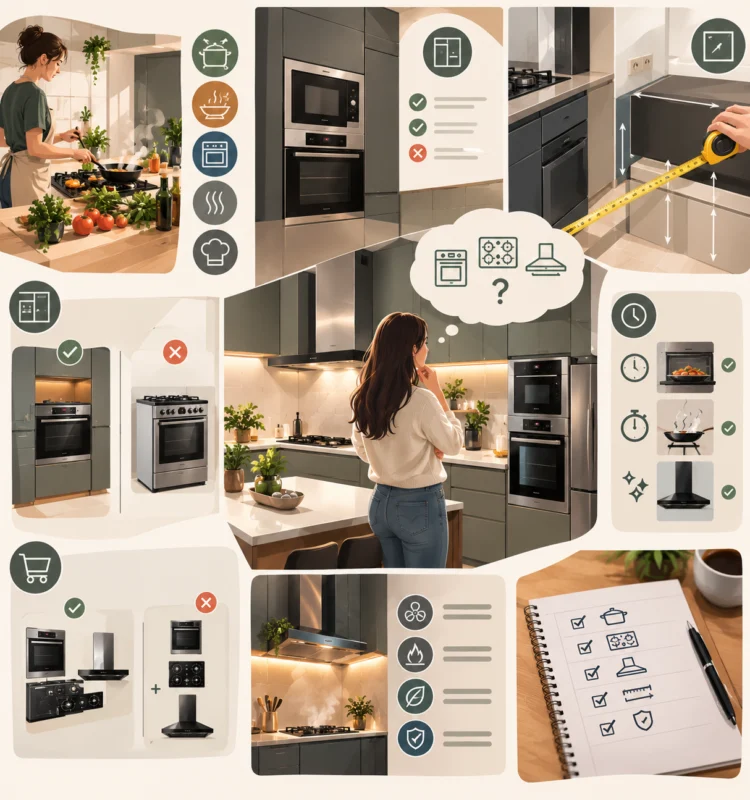
One of the most common mistakes is that the measurement is limited to the width and height of the device.
But the device needs actual space around it in order to operate, open and be maintained comfortably.
Width is important, but depth is almost equally important, especially in kitchens with limited space. The appliance's height must also be compatible with surrounding units, taking into account the opening space of nearby doors or drawers.
The location of connections, ventilation paths, and the space required for movement and installation must also be taken into consideration.
This is even more important with integrated devices, because any slight difference in dimensions can affect the shape of the unit or the way the device is installed.
Built-in devices: Consistent form versus more precise layout
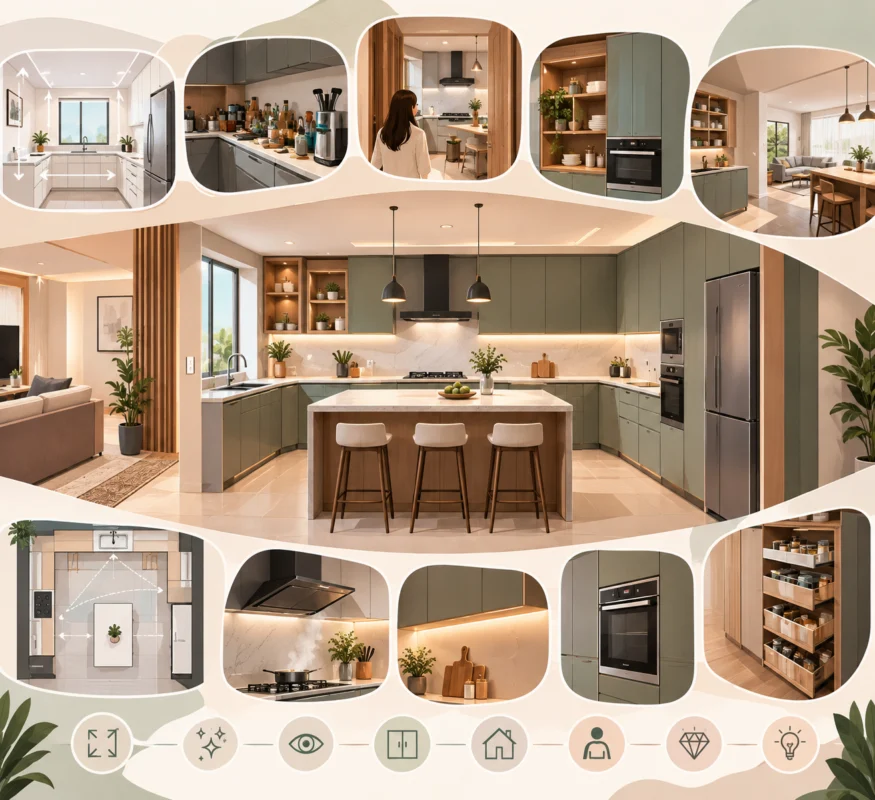
Built-in appliances give the kitchen a more organized and integrated look, because they are part of the design of the units themselves rather than just being appliances placed between them.
But this feature requires planning from the beginning.
The integrated device needs a suitable location in terms of size, ventilation, and accessibility. Future maintenance or replacement must also be planned, as accessing an integrated device can be more complicated than accessing a separate one.
This does not mean that built-in appliances are absolutely better or worse; it is simply a type of appliance that requires greater coordination between the product and the kitchen design.
Therefore, choosing the device and arranging the unit in which it will be placed must be part of the same plan, not two separate decisions.
The important specifications are those whose value becomes apparent in use
The important specifications are those whose value becomes apparent in use
Not every specification written in the device catalog has the same effect.
In some cases, small details are more important than big possibilities.
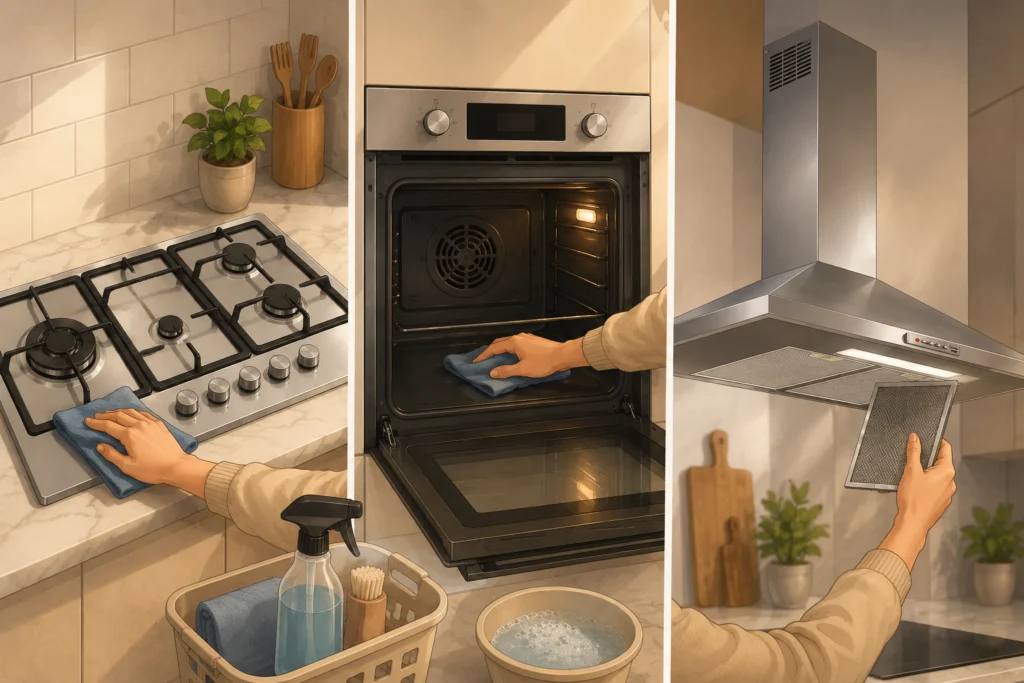
Easy oven cleaning, for example, can save time and effort on a frequent basis, while an extra program that is rarely used may not change the experience to the same degree.
In a gas stove, the placement of the burners and control knobs can directly impact its usability. Similarly, in a range hood, the air extraction method and installation may be more important than additional features that aren't frequently used.
The point is not that additional specifications are unimportant, but that their value must be measured in the context of actual use.
Sometimes, the device that saves you time is more important than the device that saves you effort
When we talk about the value of a device, we often think about how it saves effort.
But time is also a very important factor.
A device that's easy to clean, makes setup faster, or provides easier access to frequently used parts can save you a few minutes each time. And with repeated use, those minutes add up to a noticeable difference in the long run.
That's why ease of use is not a luxury.
Clear control, easy access, speed of cleaning, and the way interior spaces are arranged are all details that can have a greater impact than some of the more advanced features that appear on paper.
Kitchen appliance set or each appliance separately?
Sometimes buying an oven, stove, and extractor fan as a set is a practical solution, especially when the appliances are designed to work together in terms of shape, size, and layout.
Having a consistent set of appliances can make the kitchen design process easier, reduce variations in appearance between appliances, and in some cases facilitate coordination of installation, warranty handling, and after-sales service.
But buying the set does not automatically mean that all its parts will be the most suitable for every use.
One of the devices in the kit may be very suitable, while a single device may have different specifications that are more suitable for a particular method of use.
Therefore, the idea of a set is useful when there is a real match between its parts and the needs of the kitchen, and not just because the products are in one display.
The harmony between devices doesn't just mean the appearance
When we say that devices are consistent, we usually mean color, material, and design.
But true harmony is greater than that.
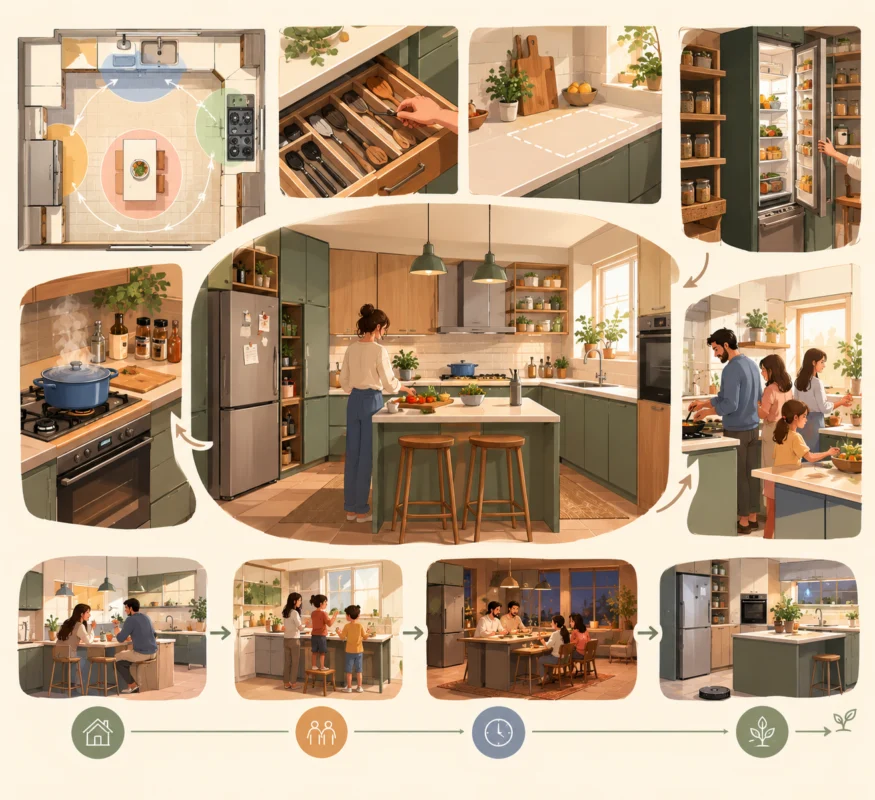
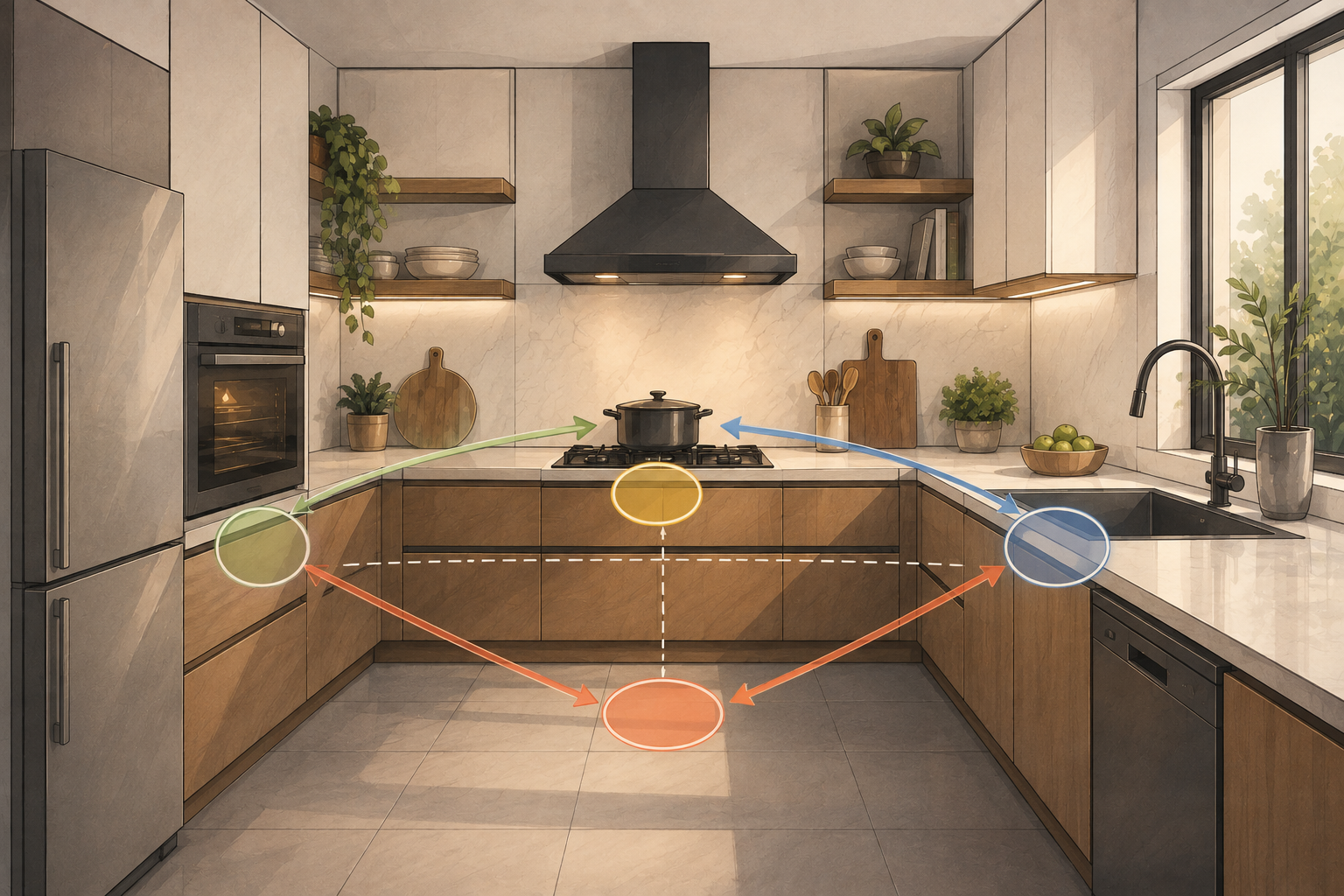
The dimensions must be compatible with the units, the control locations must be practical, and the devices must be distributed in a way that allows easy movement between them.
Having an oven in a location far from the preparation area, for example, can change the way the kitchen is used, even if its appearance is very consistent with the rest of the appliances.
Therefore, the relationship between appliances and each other, and between the surrounding workspace, is an essential part of the kitchen experience.
The composition is part of the product's value
The device itself may be good, but the way it is installed does not help to benefit from it as required.
This is very clear in devices that rely on ventilation or require specific connections.
The extractor fan is a clear example; the efficiency of the device is not related to the device alone, but also to the way it is installed, the air exit path, and its location relative to the cooking area.
The same idea applies to embedded devices, where the accuracy of their installation and their compatibility with the surrounding unit affect the form, ease of use, and accessibility.
Therefore, thinking about the device must include the place where it will be placed and the method by which it will be installed, not just the product itself.
The true value of the device becomes apparent over time
The device is not just about price and specifications at the moment of purchase.
Its true value becomes apparent after months of use, when you start to notice whether it is easy to use, convenient to clean, suitable for its location, whether its capabilities are actually being utilized, and whether the installation helped you benefit from it as expected
This is why some devices may seem similar in specifications, but the daily experience with them is completely different.
Sometimes the difference lies in small details: a more practical design, better arrangement, easier access, simpler cleaning, or greater compatibility with the kitchen space.
Ultimately, the appliance is part of the kitchen, not a separate piece
Kitchen appliances are not just a set of specifications that we compare.
Every device has its own method of use, every space has its own conditions, and the method of installation can greatly change the experience.
Therefore, the best device to use is not necessarily the one with the most specifications, nor is a set always better than individual devices, nor is a built-in device equally suitable for every design.
The most important thing is that the product is compatible with its method of use, its size, its installation, and the rest of the kitchen elements around it.
Before adding any new appliance to your kitchen, consider the whole picture: specifications, dimensions, installation location, usage instructions, and compatibility with your existing kitchen elements. These details ultimately determine whether the appliance is simply an addition to the kitchen or will truly make everyday use easier.