When furnishing a kitchen, choosing a range hood is often one of the last decisions we think about.
We choose the style of the cabinets, then the stove and oven, and then we start looking for a range hood that suits the design.
But the truth is that choosing a kitchen extractor fan does not depend solely on the appearance.
Size, suction power, installation method, kitchen space, and the nature of the cooking you do daily are all factors that can make a extractor fan suitable for one kitchen but not suitable for another.
Therefore, instead of searching for the “most powerful extractor fan” or the “most beautiful extractor fan,” it is better to start with a simpler question:
Which extractor fan is really suitable for my kitchen?
Start with the kitchen, not the extractor fan
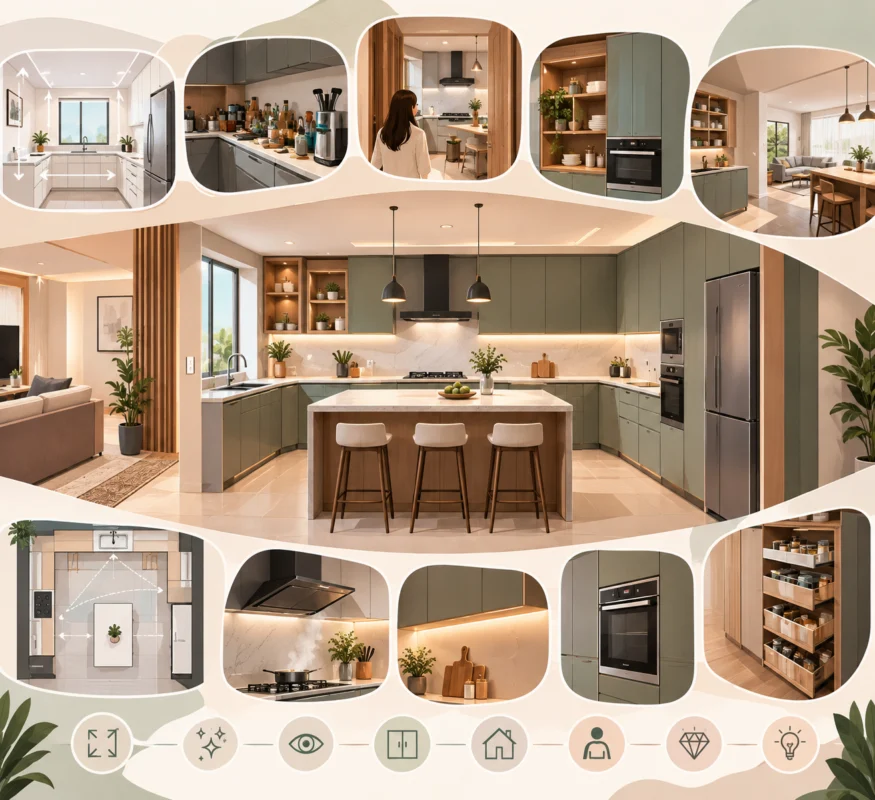
Before you look at the specifications of any device, first look at where it will operate.
Is the kitchen small or spacious?
Is it closed or open to the living room?
Where is the stove located?
How often do you fry, grill, or cook for long periods?
These details are important because the needs of a kitchen used daily to prepare simple meals differ from a kitchen where cooking is done intensively and grilling and preparing foods that produce larger amounts of fumes and odors.
Therefore, there is no single extractor fan that can be considered the best for all kitchens.
The best appliance is one that suits the size of your kitchen and how you use it.
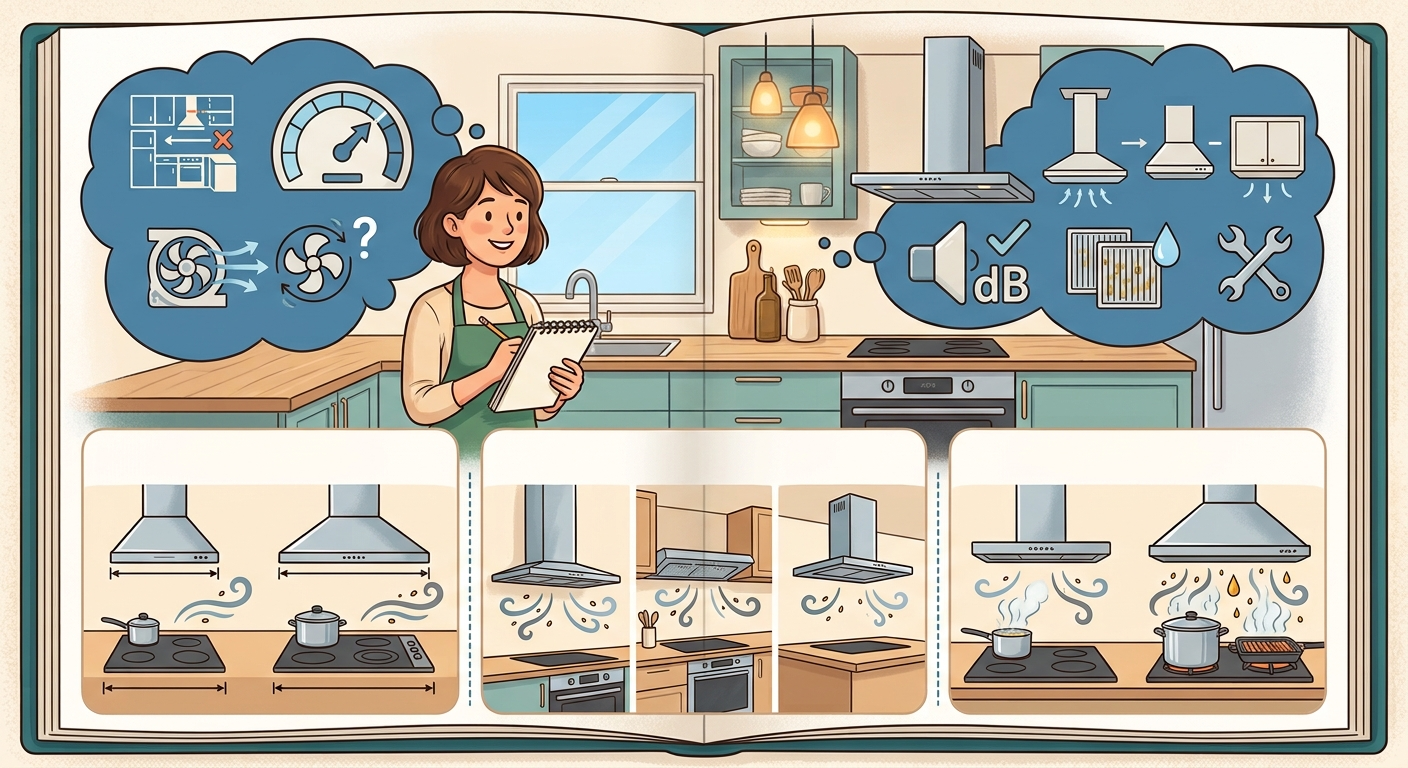
60 or 90 cm? The size starts from the stove
One of the most common questions when buying a extractor fan is:
Should I choose 60 cm or 90 cm?
The answer begins with displaying the cooking area.
The larger the stove, the more important it becomes to choose a range hood that provides adequate coverage for the cooking area.
In kitchens that rely on a 60 cm wide stove, a range hood with a suitable width for this space can be a practical choice.
When using a larger stove, especially one that is 90 cm wide, it makes sense to look for a larger extractor fan that is appropriate for the cooking area.
But don't look at the size alone.
It should also be ensured that the available space for installation allows for it, and that the design of the cabinets and the location of the extractor fan are compatible with the dimensions of the appliance.
Is a built-in extractor fan better than a pyramid-shaped one?
There is no single answer that suits everyone here.
Built-in extractor fans are integrated into the cabinet design, making them suitable for those who prefer a calm and harmonious look, especially in kitchens that rely on a built-in design.
The pyramid extractor fan appears as a distinct element on the wall, and can become part of the overall look of the kitchen.
The choice between them depends on more than just appearance.
Consider:
- Available space.
- The shape of the cabinets.
- The location of the stove.
- Kitchen design style.
- Easy to install.
- How important is appearance to you?.
If you want the extractor fan to blend seamlessly with the cabinetry, a built-in one might be more suitable.
If you want a visible appliance with a clear design, a pyramid extractor fan might be a more suitable choice.
What does the power rating of the extractor fan mean?
You might see numbers like:
650 m³/h or 850 m³/h or 1000 m³/h
But what does it mean?
This number indicates the airflow rate that the extractor can handle, and is expressed in cubic meters per hour.
Here's where you shouldn't fall into a common mistake:
The larger number is not necessarily the best choice for everyone.
You need to consider the size of the kitchen, the nature of the cooking, and the amount of fumes and odors produced during use.
A kitchen where frying and grilling are done frequently may require higher performance than a kitchen where simple meals are prepared for short periods.
When do you need a more powerful extractor fan?
There are some situations where the pulling force becomes a more important factor when choosing.
If you:
- It is cooked daily and intensively.
- It relies heavily on frying.
- She grills constantly.
- The oven is used for long periods.
- It has a kitchen that is open to the rest of the house.
- Prepare more than one type of dish at the same time.
Here it becomes important to pay attention to the performance of the extractor fan, not just its appearance.
Because the fumes, grease, and odors produced from cooking can easily spread into the surrounding spaces, especially when the kitchen is open.
An open kitchen makes choosing a range hood more important
In a closed kitchen, fumes and odors remain within a relatively defined space.
But when the kitchen is open to the living room or dining area, smells can quickly travel to the rest of the house.
Here, the extractor fan becomes not just a design element, but an essential part of the kitchen user experience.
Therefore, if you have an open kitchen, make the performance of the extractor fan and ventilation one of the first things you consider when buying.
Should I choose the extractor fan based on the stove or the kitchen design?
It is best not to choose based on only one of them.
Start with the stove because the extractor fan should be suitable for the cooking area, then look at the kitchen design and the space available for installation.
You may find an excellent extractor fan in terms of performance, but it may not suit the dimensions of the cabinets or the overall shape of the kitchen.
On the other hand, you may find a very nice extractor fan, but its performance does not suit the nature of your use.
Therefore, the right choice is a meeting point between:
Size + Performance + Installation + Design + Usage.
What about the noise?
The power of the extractor fan is not the only factor that affects the experience of using it.
If you use the device for extended periods, it is also important to consider the noise level and how it is operated.
A range hood that provides good performance and remains comfortable during use can make the cooking experience better, especially in open kitchens or homes where the family gathers near the kitchen.
Therefore, when comparing more than one model, do not just look at the pulling power, but also check the full specifications of the device.
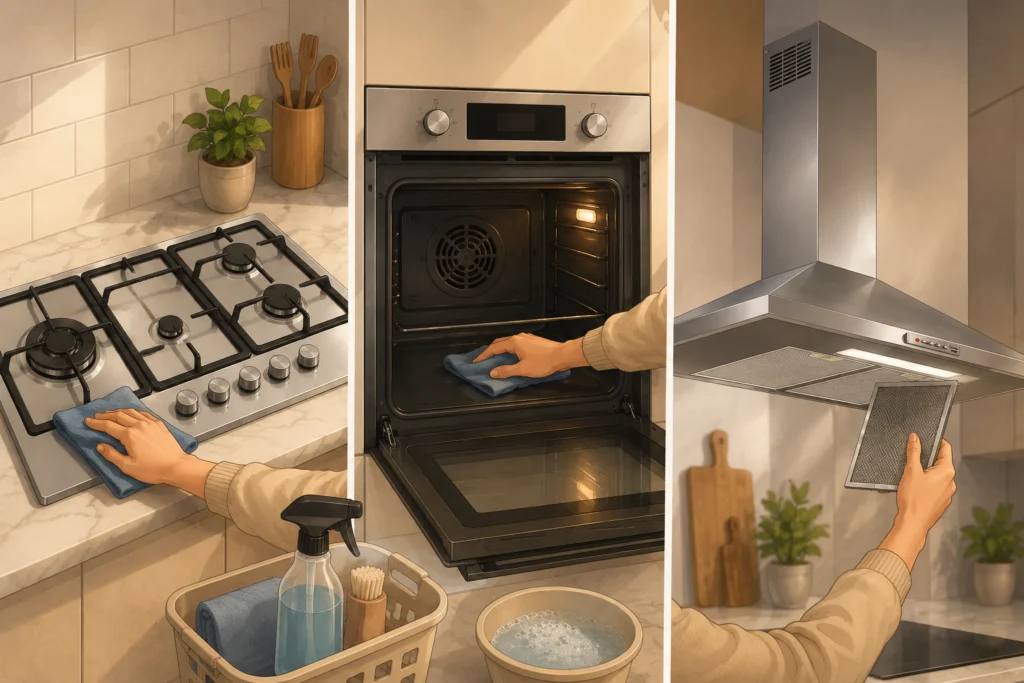
What about filters and cleaning?
The extractor fan operates in an environment full of steam and grease, therefore filters are an important part of the user experience.
The easier it is to clean the filters, the easier it is to maintain the device in the long run.
Therefore, when buying a new extractor fan, don't just ask:
"Does it pull well?"
But also ask:
"Can I maintain it easily?"
Because the performance of the device is not only related to the specifications on paper, but also to how it is used and cared for over time.
Don't let the design fool you
It's easy to be attracted to a straw because of its shape.
You might like the color, the pyramid design, or the built-in shape inside the cabinet.
But the extractor fan is primarily a functional device.
Therefore, do not let the shape come before:
- The right size.
- Pull force.
- Installation method.
- The appliance is suitable for the kitchen.
- Easy to use and clean.
Design is certainly important, but it gets better when combined with proper performance.
If you were setting up a complete kitchen
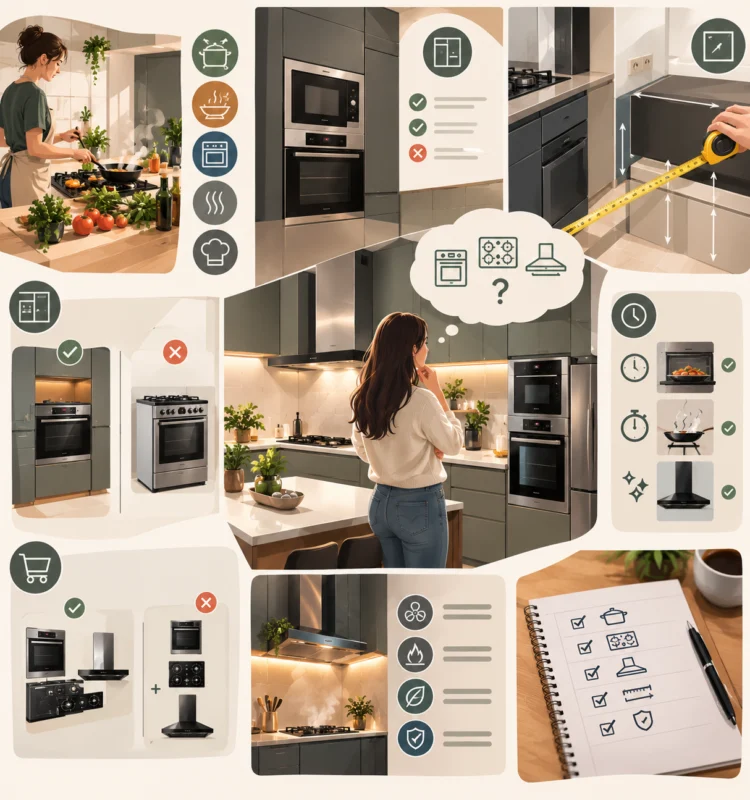
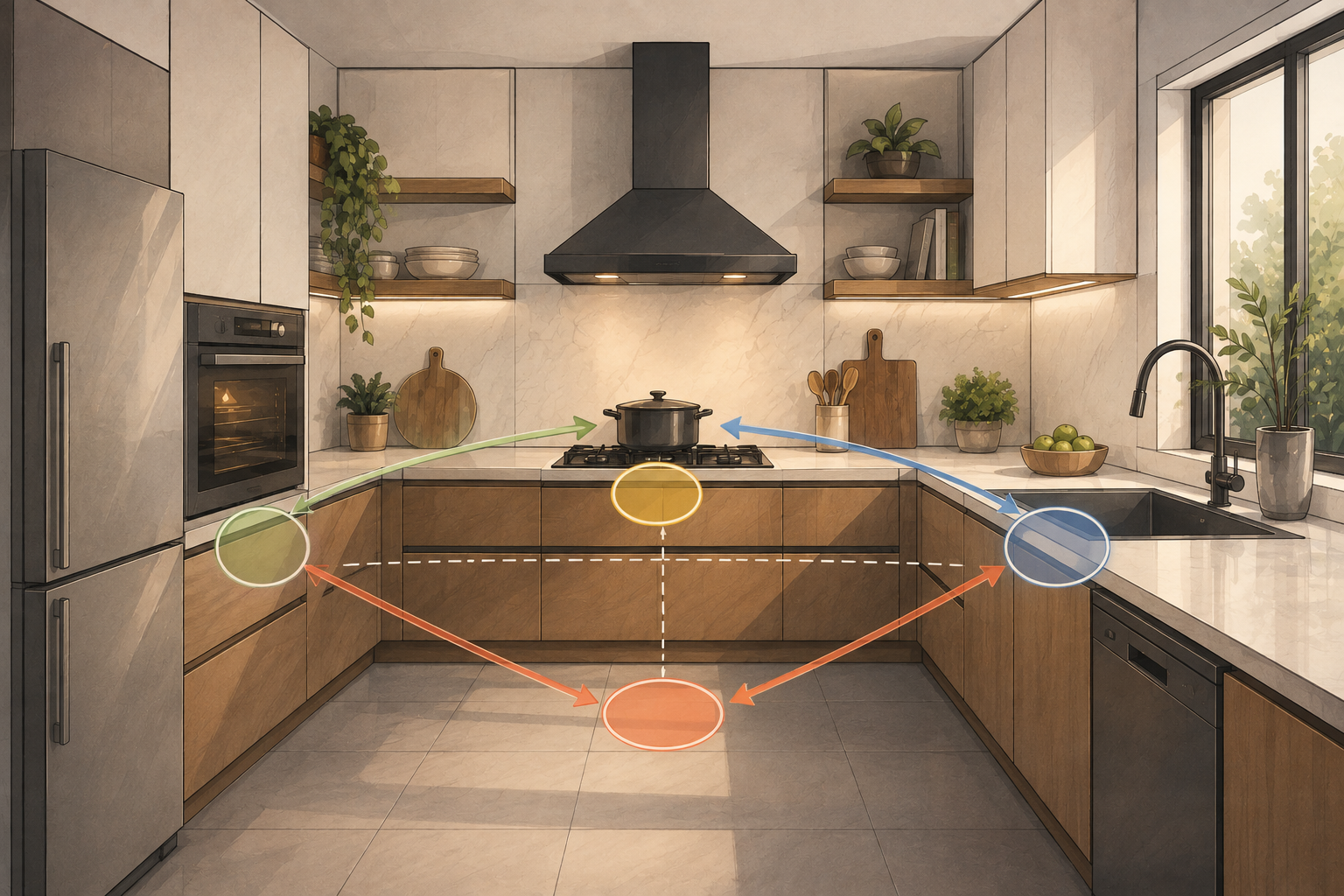
If you are starting a new kitchen from scratch, it is best not to treat the extractor hood, oven and stove as completely separate appliances.
The harmony between them can make a clear difference in the look of the kitchen and the experience of using it.
For example, the format can be:
Extractor fan + oven + stove
This becomes even more important in built-in kitchens, where appliances are planned along with the cabinetry from the start.
In this case, choosing a harmonious set may be easier than trying to coordinate different appliances after the kitchen design is complete.
How to choose quickly?
After all these details, the purchase decision can be summarized in a set of simple questions:
Is my kitchen small?
Focus on the right size for the space, without sacrificing the required performance.
The gas stove is 60 cm?
Start by looking for a range hood that matches the width of your cooking area and the available space.
The gas stove is 90 cm?
Look for larger extractor hoods that provide adequate coverage for the cooking area.
I cook a lot and use frying and grilling?
Make pulling power a priority.
Is my kitchen open?
Pay more attention to performance, ventilation, and noise level.
I want a calm and compact look?
A built-in extractor fan might be suitable for you.
I want the extractor fan to be a visible part of the design
A pyramid-shaped extractor fan could be a suitable choice.
Set up a complete kitchen?
Think about coordinating the extractor fan with the oven and stove from the beginning of the design process.
Choosing a kitchen extractor fan doesn't start with asking about the most powerful model or the most beautiful design.
It starts with understanding your kitchen.
Its size, the width of the stove, the cooking method, the rate of use, the type of design you want, and the space available for installation.
Only then do you begin comparing the pulling power, sizes, types, and specifications.
Because the right extractor fan is not necessarily the most expensive or the most powerful, but rather the device that provides the performance you need, in the size that suits your kitchen, and the design that complements its space.
Before buying a new extractor fan, take a minute to measure the space and determine how you use the kitchen, then choose the appliance that combines the right performance and design to suit your kitchen.