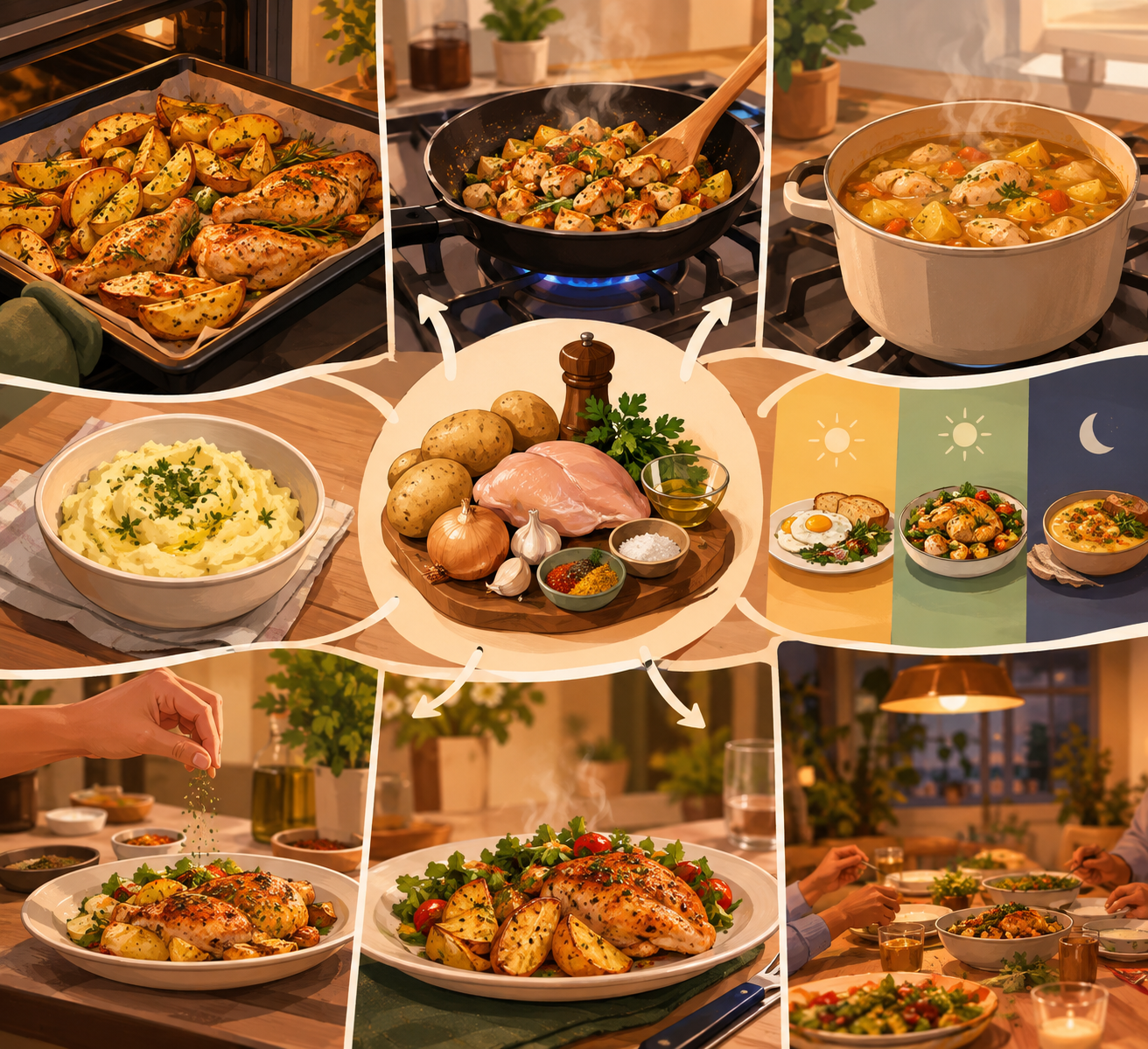
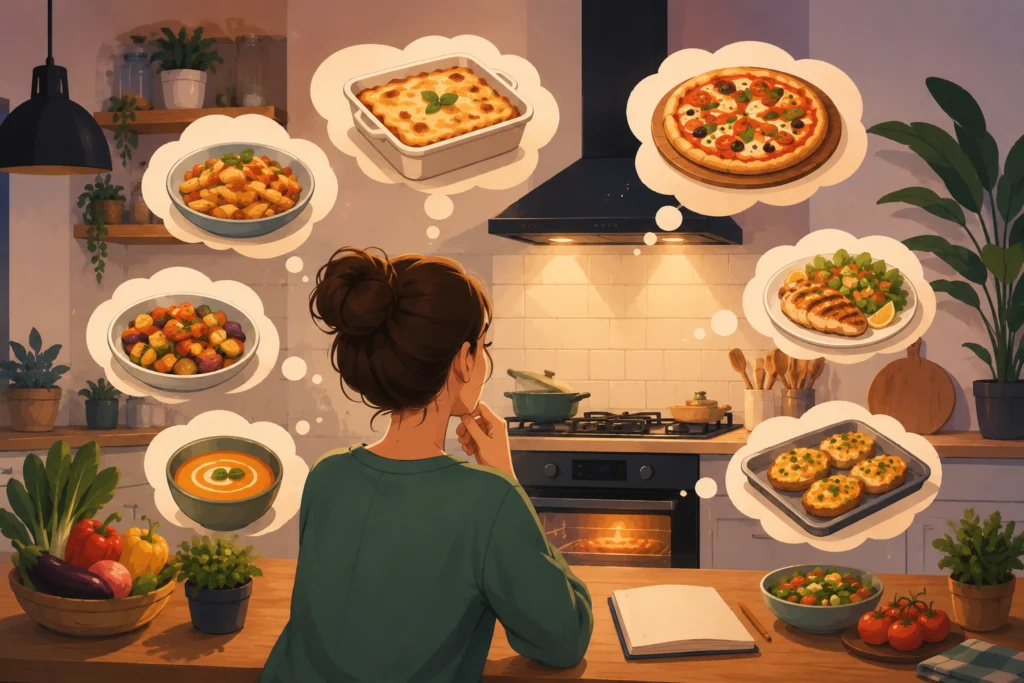
Imagine you have potatoes, onions, chicken, some spices, and a little oil.
Simple ingredients found in most kitchens.
But these same ingredients can be transformed into completely different dishes.
Potatoes can be made crispy in the oven, soft and mashed, or fried in the pan.
Chicken can go from being a fast food meal to a dish that requires a long time to marinate and cook.
So, what changes the outcome?
The ingredients are certainly important, but they are not the whole story.
A dish begins to acquire its character from the moment we decide how we will cook it, then when we will serve it, and what small details we will add to it.
Here, the recipe becomes more than just a collection of ingredients.
It becomes a complete experience.
The same ingredients do not mean the same result
Sometimes we look at the list of ingredients and think that it determines the shape of the final dish.
But the kitchen proves the opposite every day.
Take a simple ingredient like potatoes.
They can be cut into thin slices and placed in the oven until they become golden and crispy.
It can be cut in a different way, then cooked slowly until it becomes tender.
It can be mashed and butter or milk can be added to it.
The ingredient is almost the same, but the experience has changed completely.
This happens with most foods.
The difference is not just what we put on the plate, but how we handle it.
This is where the personality of the eater begins to emerge.
The cooking method is the first decision that changes everything
When the heat source or the method of using it changes, the result changes.
The oven gives food a different experience than a frying pan.
Grilling gives a different flavor than boiling.
Slow cooking creates a different texture than rapid cooking.
Even the way we put food on the fire can make a difference.
A piece of chicken cooked slowly for a longer time will not be the same as a piece of chicken that has been browned quickly at a high temperature.
Here we discover that cooking is not just a stage between the ingredients and the dish.
This is the stage where food actually begins to change its character.
Then time comes… to change the meaning of the dish
But the cooking method alone is not enough.
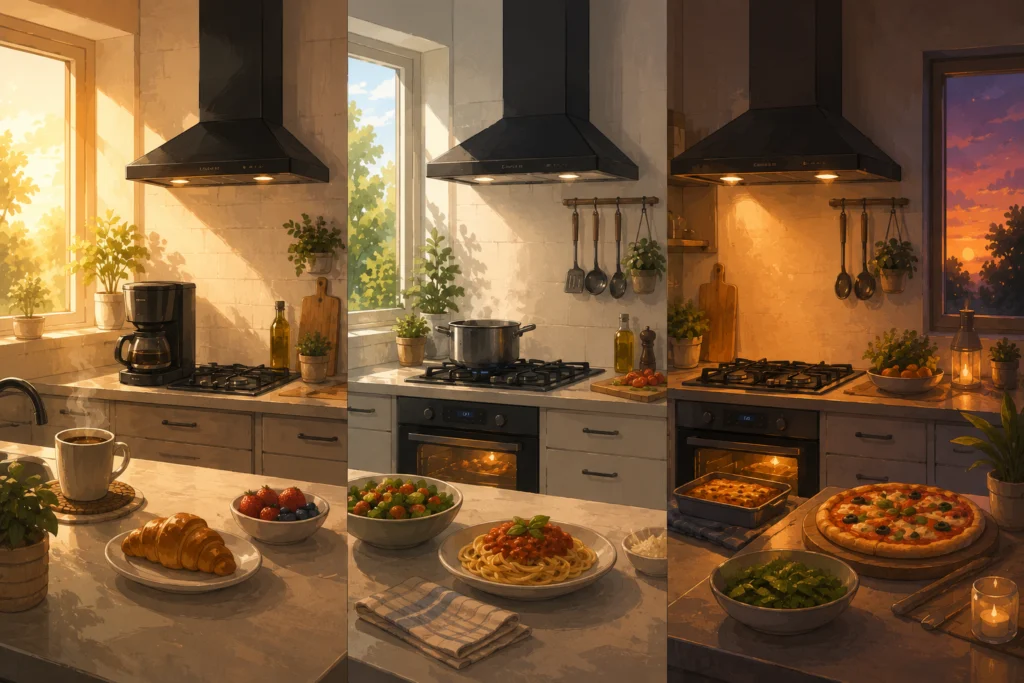
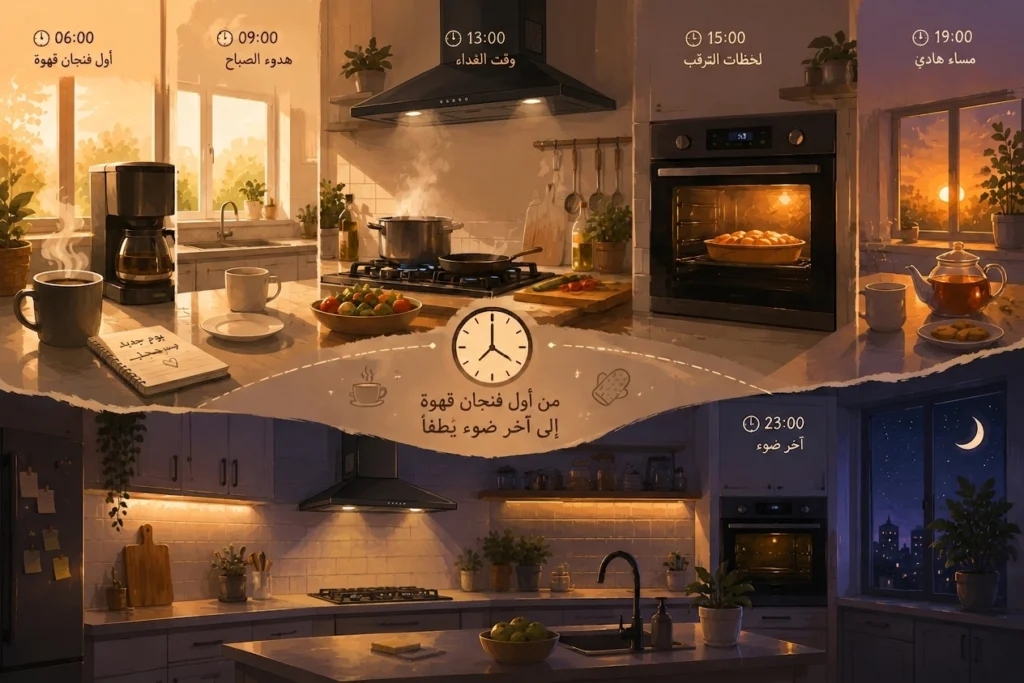
The same dish may look different depending on the time we choose to eat it.
There are foods we look for in the morning because they are light and quick.
Other foods we prefer for lunch because they take longer to digest and make us feel full.
In the evening, we might look for something simpler, even if its ingredients are similar to what we ate earlier.
This means that food selection is not just about ingredients.
Time itself is included in the recipe.
The same bread, eggs, and cheese can become a quick breakfast in the morning, or a completely different meal if we add other ingredients and a different way of serving it at the end of the day.
So the dish doesn't change just when we change the way we cook it.
Sometimes it is enough to change the time at which we choose it.
Then come the details that don't appear in the ingredients list
Here begins the most exciting phase.
You might succeed in preparing the same recipe, but feel that something is missing.
The reason could be a very small detail.
Degree of reddening.
Quantity of spices.
Crunchy edges.
Simple sauce.
Add the herbs at the end instead of at the beginning.
Or even leave the food for a few minutes before serving it.
These details do not change the basic ingredients, but they do change the experience that the dish offers.
The chicken dish itself can be very ordinary, then become much more appealing once it gets a good browning color, or a suitable seasoning is added, or it is served with an ingredient that complements its flavor.
This is where the recipe begins to move from being just a "meal" to a dish with a distinct character.
Even the presentation style complements the character of the dish
After all this, some might think that the task is over once the food is cooked.
But there is one final moment that affects the experience: the moment of presentation.
A dish placed directly in the middle of the table feels different from food that is carefully arranged.
The colors appear differently.
The texture becomes more pronounced.
The smell reaches the person before they start eating.
Even the choice of dish itself can change the impression.
This does not mean that the food needs to be presented in a complicated or professional manner.
Sometimes a simple arrangement is enough to make a meal look different.
Because we don't just eat the ingredients.
We experience the entire dish.
This helps us understand why some dishes are worth preparing at home
You may be able to easily buy some ready-made foods.
But there are dishes whose true enjoyment lies in the way they are prepared.
Not because preparing it at home is necessarily cheaper, but because the experience is different.
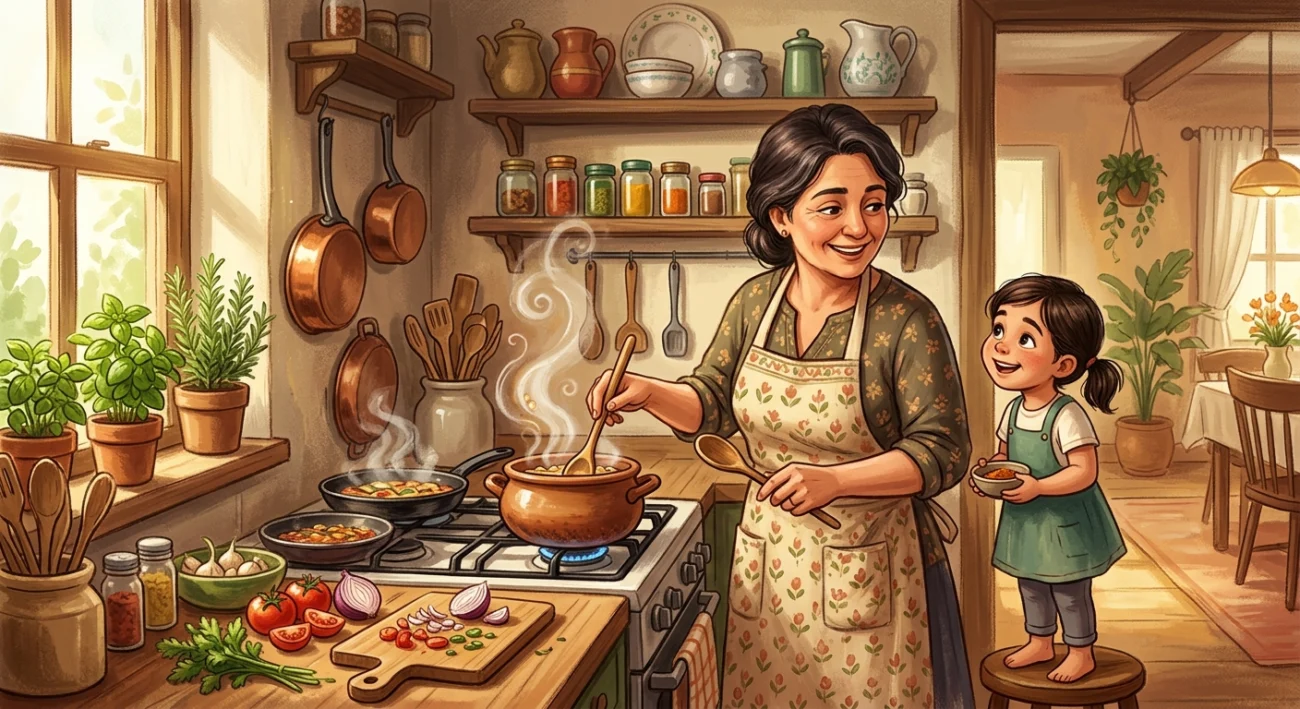
It starts with preparing the ingredients.
Then the sound of the food while it was browning.
And the aroma of spices when it begins to appear.
Wait until the meal reaches the appropriate consistency.
Then the moment you put the dish on the table while it is still fresh.
In this case, the result is not the only thing you are looking for.
The journey itself becomes part of the fun.
And the best part is that you can make the dish resemble you
When you cook at home, you don't have to stick to just one version of the recipe.
You can make the flavor stronger or weaker.
You can increase or decrease the spices.
Or change the method of browning.
You can try a new addition.
You may discover over time that the recipe you started following exactly has become your own version.
And here something important happens.
She no longer cooks a "recipe".
You started cooking your own way.
This is why the same dish varies from house to house, and sometimes from day to day within the same house.
The dish changes… because the moment changes
You might cook the same recipe on a normal day and it would just be a meal.
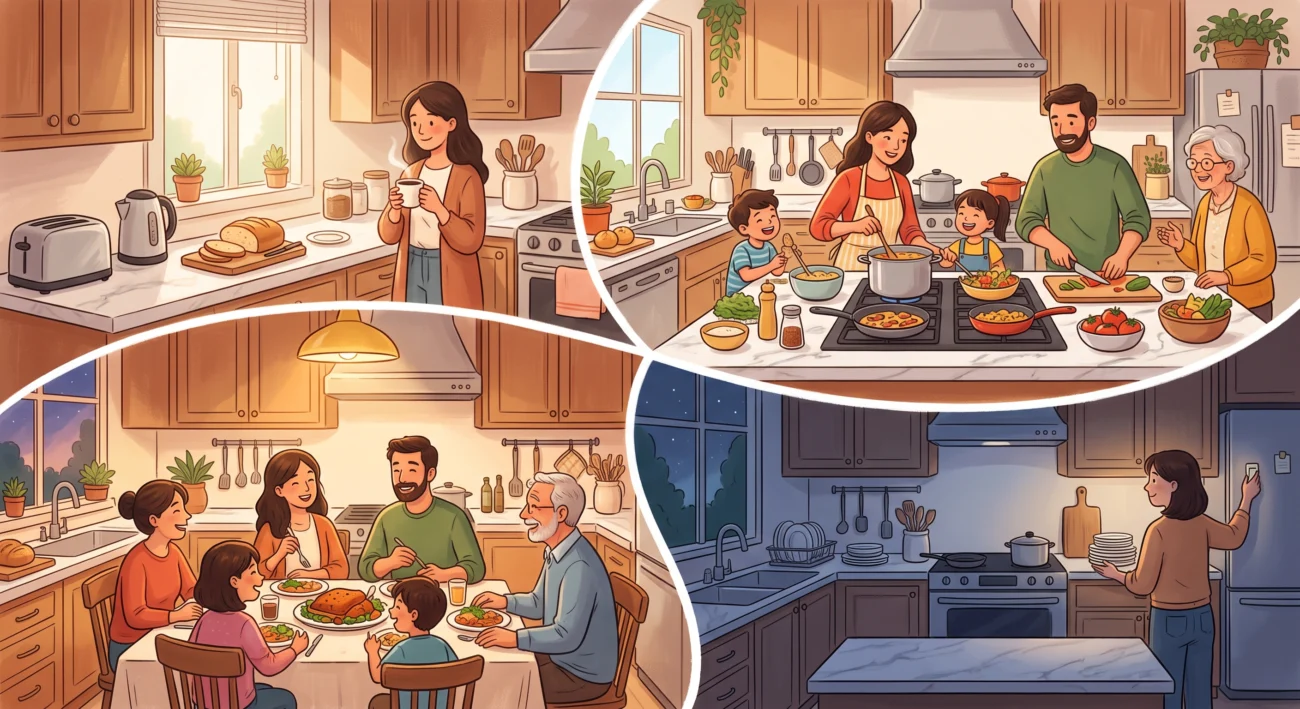
Then you cook it on the weekend, taking your time to prepare it, and sit with the family around the table, and it takes on a completely different meaning.
You might cook it again for someone you love, and remember it years later because of the occasion it was associated with.
And here the most beautiful truth emerges.
The character of a dish is not created by spices and heat alone.
Sometimes it's made by the moment we eat it.
Therefore, the same food can be ordinary one day, and very special another day.
In the end… the recipe is just the beginning
The ingredients lay the foundation.
The cooking method changes the texture and flavor.
Time changes our choice of dish and how we enjoy it.
And the small details give it its character.
Then comes the moment of presentation, bringing all these elements together into one experience.
Therefore, the same ingredients can give you more than one dish, and the same recipe can look different from time to time.
Because cooking, in the end, is not an automatic repetition of what is written.
It's a space for experimentation.
Every time you enter the kitchen, you have the opportunity to take the same ingredients and tell a different story.
Perhaps this is why there is no single true version of many dishes.
There is a recipe you started with, then your own method, the time you chose to cook, the details you added, and the moment you sat down to eat it.
All these things go into the dish without appearing in the ingredients list.
Therefore, the dish may start with the same ingredients you used yesterday, but in the end it comes out with a completely different character.
Sometimes the difference isn't what you have in your kitchen, but how you choose to make something out of it.
Next time, try looking at your ingredients in a different way; change the cooking method, the timing, or a small detail in the recipe, and discover how the same ingredients can create a completely new experience.