If you tried to remember a kitchen from your childhood, your memory would most likely not begin with a description of the shape of the cabinets or the color of the marble.
You will remember a particular smell.
A voice.
A person was standing in his usual place.
Or perhaps a morning when you woke up to the sound of dishes and a cup of coffee.
And here begins the story of the kitchen.
The kitchen is not just a room we enter when we want to prepare food, but a space whose shape and rhythm change throughout the day, and within which the family moves differently from one person to another.
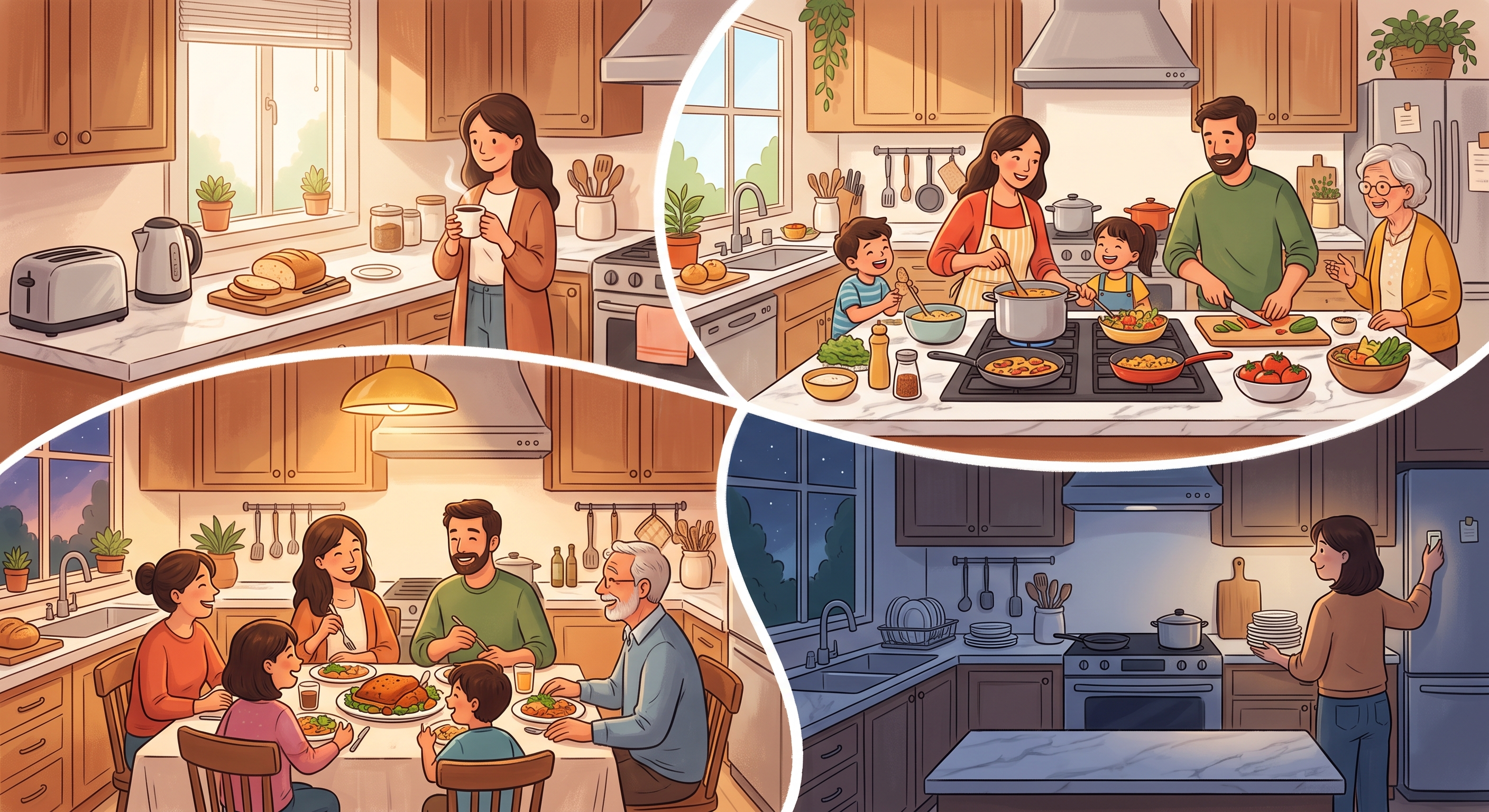
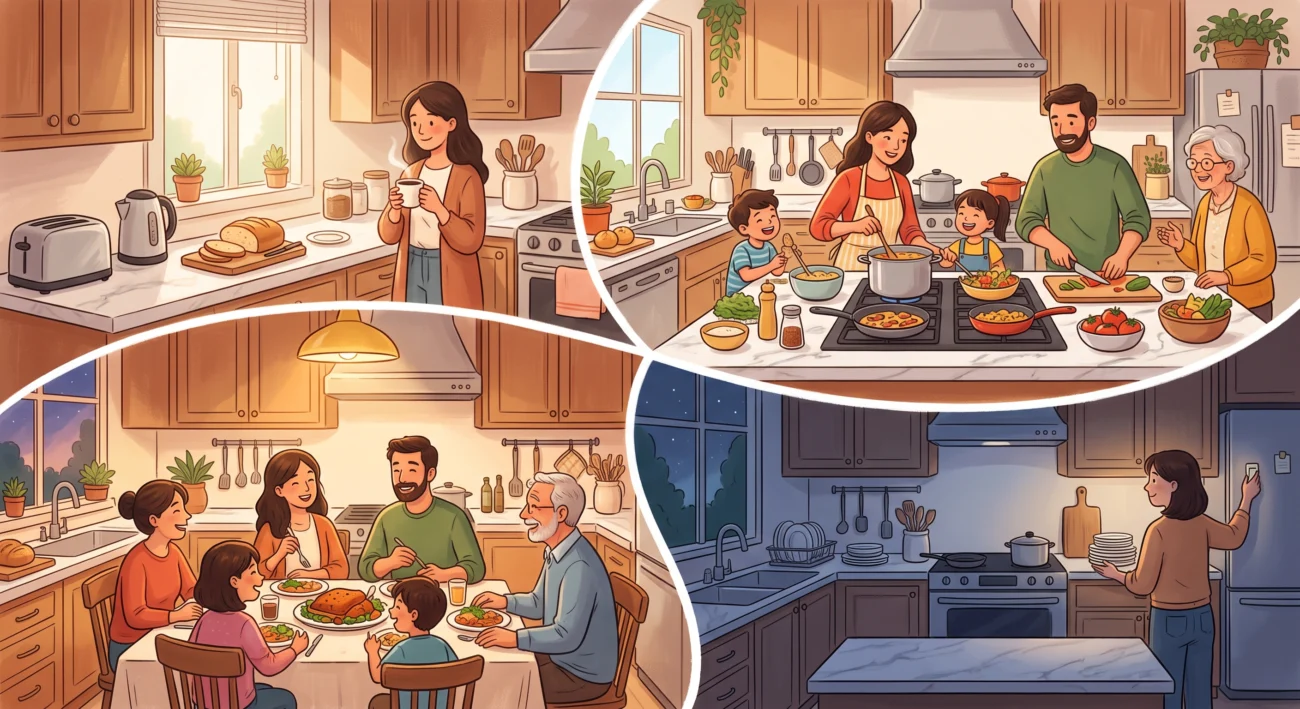
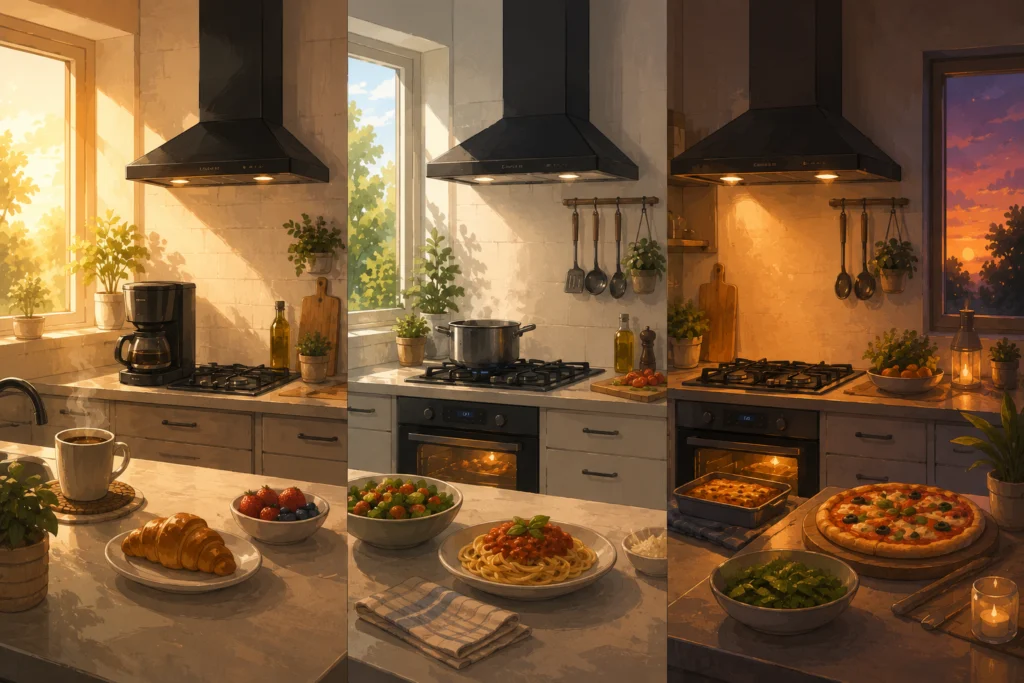
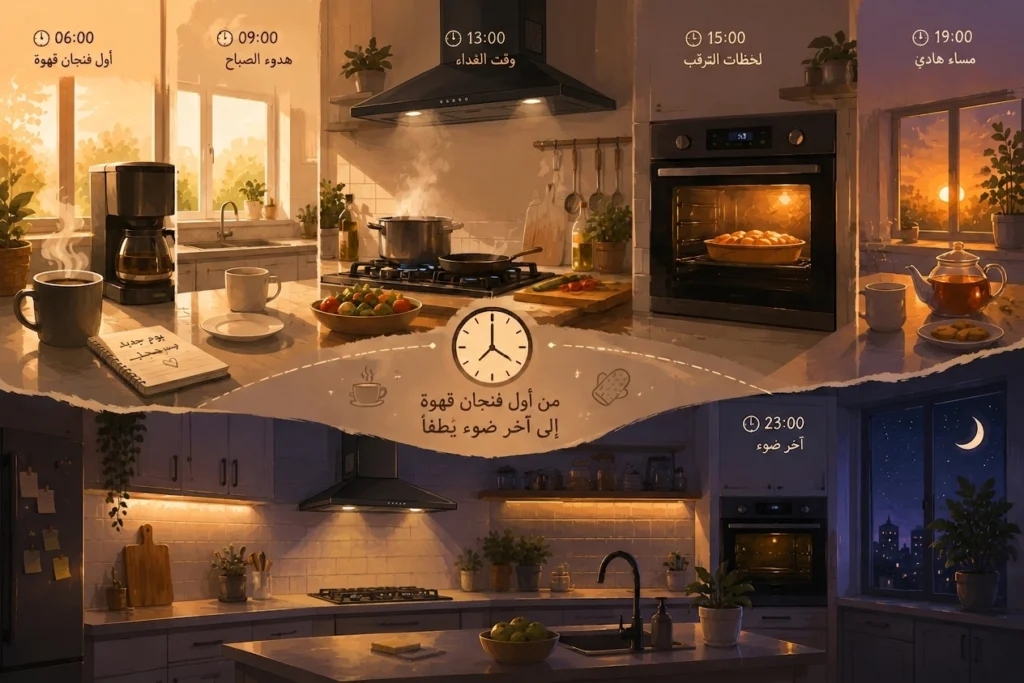
From the first cup of coffee in the morning to the last dish that is put away at night, the kitchen goes through a complete journey that is very similar to the journey of the house itself.
Everything starts with a small moment
In the morning the kitchen is different.
The house is still quiet, movement is limited, and the day often begins with a very simple action.
coffee.
A cup of tea.
cob.
Or a quick breakfast before the start of a long day.
But despite the simplicity of this moment, it may be one of the moments most closely associated with our memory.
Years later, you may not remember what happened on a particular morning, but you may remember the smell of coffee, the sound of the kettle, or the shape of the light that came into the kitchen.
Here we understand that some memories of home do not begin with big events.
Sometimes it starts from very small details.
Then the house begins to wake up
After the first person enters the kitchen, the others gradually begin to appear.
A person looking for breakfast.
Another person is bringing something for work.
A child opens the refrigerator looking for something he likes.
A family member might just stand in the kitchen to talk to the person who is preparing the food.
And here the kitchen changes completely.
It is no longer just a place to prepare something quick, but has become a point where the different paths of family members meet.
Everyone enters it for a different reason.
But everyone finds themselves in the same place.
The kitchen is not used in the same way by everyone
If you were to observe the house for a whole day, you would discover that everyone has their own "private kitchen" within the same kitchen.
There are those who love cooking and spend a long time preparing.
And there are those who only come in when they need something quick.
Some people like to sit next to another person while cooking and talk to them.
There may be someone who hardly ever cooks, but knows exactly where the coffee is and where the cups are.
This difference is important.
Because ultimately, the kitchen is not designed for just one person.
It is a space used by different individuals, at different times, and in different ways.
Therefore, a successful kitchen is not just one that contains everything, but one that can accommodate these differences without anyone feeling that they are disrupting the other.
As lunch approaches, the rhythm of the place changes
Around midday, the kitchen begins to enter a different phase.
It's no longer just a cup of coffee or a quick breakfast.
Now there is preparation.
Cutting.
spicing.
Cooking.
And sometimes more than one person works at the same time.
The oven starts working, the stove is used, and the need for more space on the countertop becomes apparent.
A family member may come in to help with the preparations, while another person stands nearby to talk.
Here another aspect of the kitchen's personality emerges.
The place that was quiet in the morning is now much busier.
But this movement is not necessarily chaos.
It's a natural part of the place's life.
Some kitchens are showing their character at this moment
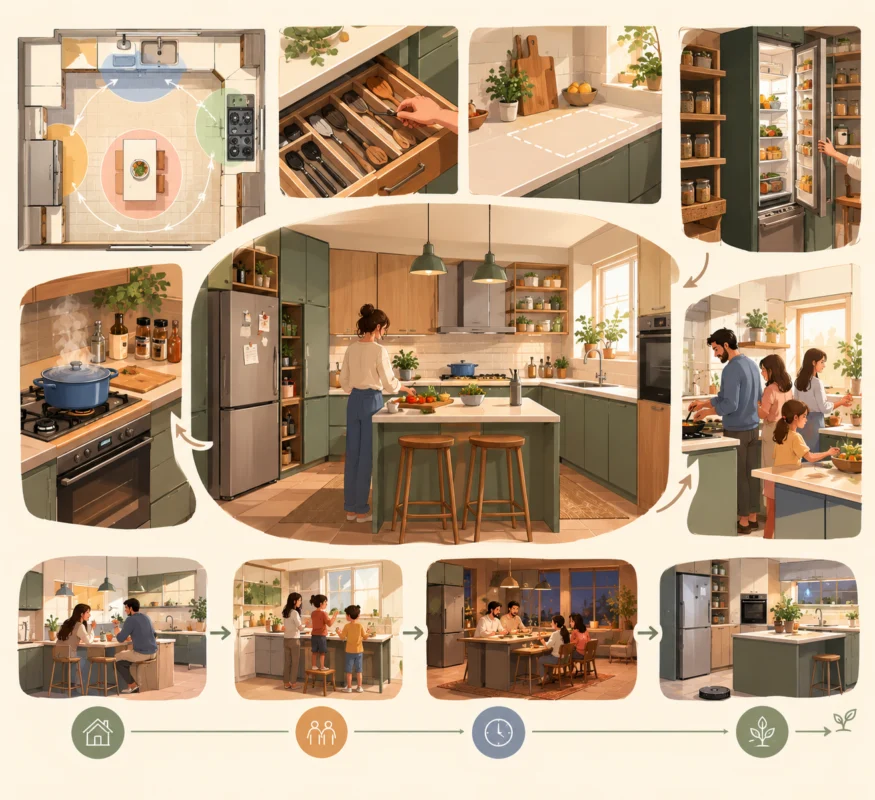
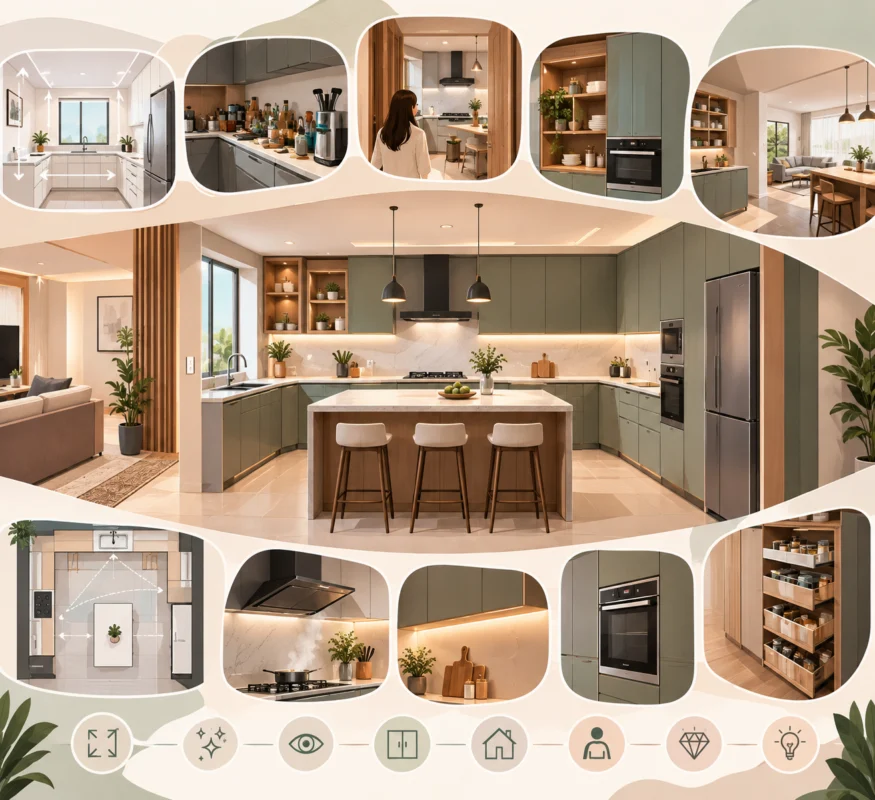
As the kitchen is used more, the quality of its design becomes more apparent.
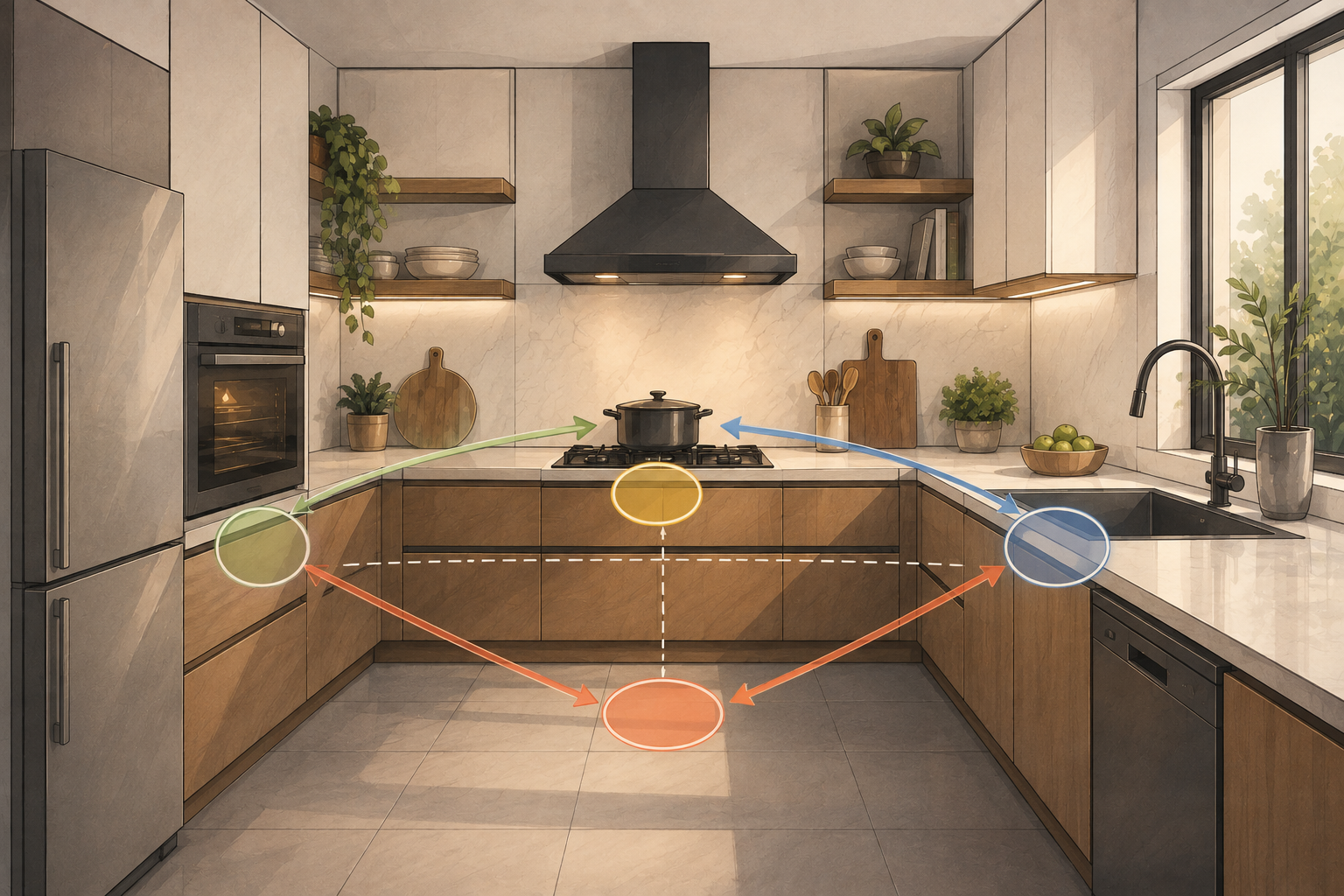
Is there enough space for preparation?
Can two people move at the same time?
Are the tools used regularly nearby and easily accessible?
Are the devices distributed in a way that makes the work easier?
We may not notice these details when the kitchen is empty.
But once the real day begins, we discover whether the place was truly designed for life.
Therefore, the kitchen is not tested when it is tidy and empty.
But rather when the family starts using it.
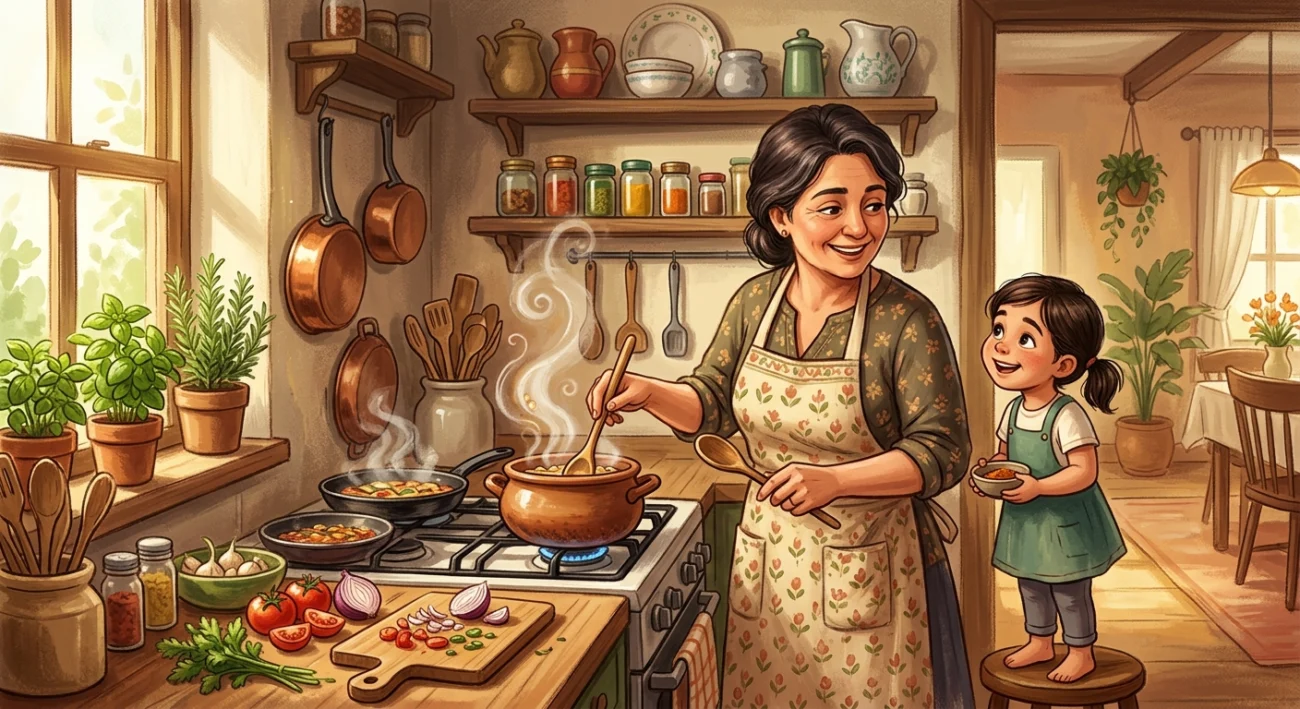
Then comes the moment when food becomes a gathering
As lunchtime approaches, the role of the kitchen may change again.
There is no longer just one person doing the preparations.
Family members are getting closer.
Someone is asking about food.
Another person is tasting something.
A third person prepares the dishes.
The conversation may continue even after the cooking is finished.
And here something important happens.
Food is no longer just the result of the cooking process.
It even became a reason for gathering.
This is one of the most important stories that the kitchen creates without us realizing it.
And on weekends the journey becomes longer
During working days, these stages may pass quickly.
But on weekends, the rhythm changes.
There is no such degree of urgency.
Breakfast may start late.
A recipe may be prepared that requires more time.
Or a family member spends more time in the kitchen.
Preparing food itself may turn into an activity in which the family participates.
And here the kitchen begins to regain another aspect of its character.
The space that was a place for accomplishing tasks during the week becomes a space for time itself at the end of the week.
This is why some kitchens are associated in our memory with relaxation, holidays, and gatherings.
But the best part of cooking might happen after the cooking is finished
It may seem that the story ends as soon as the food is served.
But in reality, it never ends.
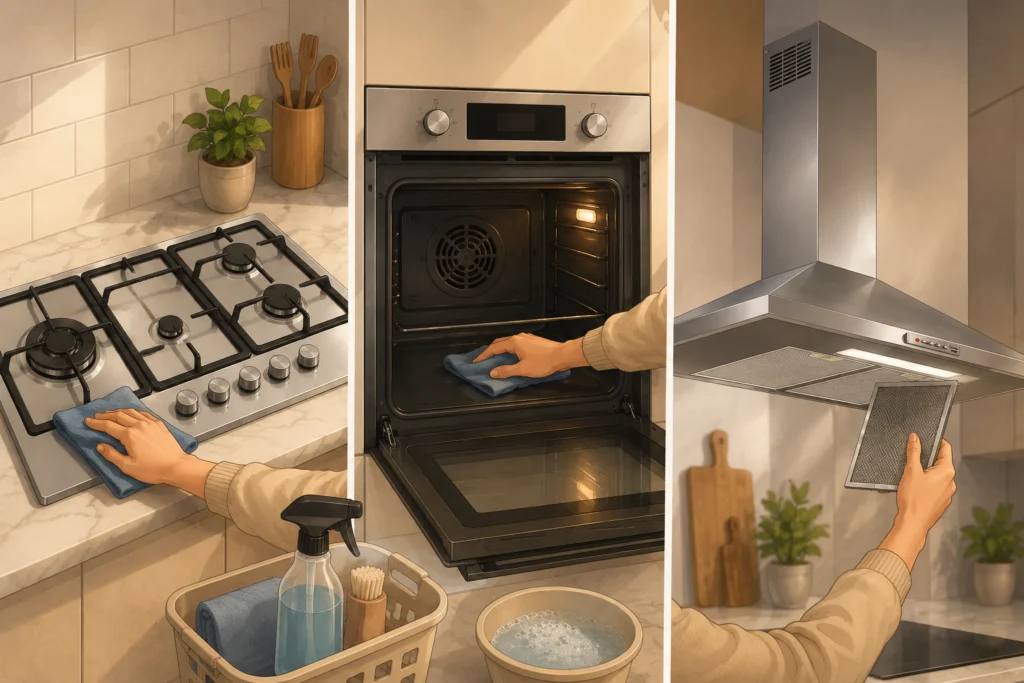
After eating, some people return to the kitchen.
Dishes are collected.
Cups that are washed.
Leftover food is stored.
The last person to turn off one of the devices or close the closet door.
These moments may seem very ordinary.
But it's part of the journey itself.
The kitchen doesn't only exist in the moment of preparing food.
It exists before and after it.
And at the end of the day, the place becomes quiet again
After hours of activity, the kitchen returns to its quiet state.
The devices stop working.
Movement decreases.
Things are arranged.
The place is now ready for a new day.
But one thing remains.
Memories.
During this day, there was a cup of coffee, a casual conversation, a meal, a laugh, and perhaps a simple situation that would not have attracted anyone's attention when it happened.
As the years go by, it may be precisely these details that we remember.
This helps us understand why we remember our old kitchens
When we remember a kitchen from the past, we are not really just remembering the place.
We remember the life that was happening inside him.
We remember the people who used it.
And the food that was prepared in it.
And the times when we used to gather around him.
Therefore, the kitchen may change completely, but its image in memory remains the same.
Memory does not only store safes and devices.
She keeps to herself what happened between them.
The kitchen is not a room… it's a daily journey
Perhaps this is why our relationship with the kitchen differs from many other spaces in the house.
He does not perform one job all day.
It begins as a quiet place in the morning.
Then it becomes a space for movement.
Then it turns into a place for preparation and gathering.
And at the end of the day, things return to calm.
Throughout all these stages, each person uses it in a different way.
Between the beginning and end of the day, the kitchen creates dozens of small moments that we may not notice when they happen.
But over time it becomes part of the story of the house.
From the first cup of coffee to the last dish, the kitchen goes through a complete journey every day.
A journey that begins with small details, then expands with the movement of family members, and turns into food, conversation and gathering, then ends quietly in preparation for a new day.
Therefore, the kitchen in our daily lives is not just a space that we use.
It is the place where the habits of family members intersect, where simple memories are formed, and where the details of life appear as they truly are.
The kitchen design may change over the years, and its appliances and colors may change, but what happens inside it is what gives it its true value.
In the end, we don't remember the kitchen because it was the most beautiful room in the house.
We remember him because he was a part of our lives.
Make your kitchen a part of your home life, and design it in a way that accommodates movement, comfort, and the everyday moments that make up your memories.